
India vs England, Commonwealth Kabaddi Championship 2026: Before Match 4, the Real Question Is Information Quality, Not Victory
मुख्य उत्तर: भारत बनाम इंग्लैंड, कॉमनवेल्थ कबड्डी चैंपियनशिप 2026 का मैच 4 अहमदाबाद में प्रस्तावित है, लेकिन उपलब्ध सामग्री में तारीख, आधिकारिक प्रसारक और स्ट्रीमिंग प्लेटफॉर्म की पुष्टि नहीं है। भारत रोटेटेड टीम के साथ खेलेगा; इसलिए जीत का अंतर युवा खिलाड़ियों की वास्तविक अंतरराष्ट्रीय क्षमता का सीमित संकेत होगा। मुख्य तथ्य: - आयोजन: Commonwealth Kabaddi Championship 2026; मुकाबला: Match 4। - स्थल: अहमदाबाद; भारत का अभियान इंग्लैंड के खिलाफ शुरू होने की जानकारी। - कप्तान: सुरजीत सिंह; उप-कप्तान: नवीन कुमार—पहचान की स्वतंत्र पुष्टि आवश्यक। - भारत की टीम में प्रमुख खिलाड़ियों को आराम और युवा खिलाड़ियों को अवसर मिलने की बात। - ईरान और चीनी ताइपे की अनुपस्थिति बताई गई; आधिकारिक प्रतियोगिता विवरण उपलब्ध नहीं। स्रोत: प्रदत्त Stage-2 Deep Professional Analysis; प्रकाशन तिथि उपलब्ध नहीं। स्वतंत्र आधिकारिक सत्यापन उपलब्ध नहीं | Cross-checked: cricsultan.com पर सत्यापन उपलब्ध नहीं। संबंधित प्रश्न: प्रश्न: भारत बनाम इंग्लैंड मैच की लाइव स्ट्रीमिंग कहां होगी? उत्तर: उपलब्ध जानकारी में किसी आधिकारिक चैनल या प्लेटफॉर्म का नाम नहीं है; दर्शकों को आयोजक और टीमों के सत्यापित चैनल देखने चाहिए। प्रश्न: क्या यह मुकाबला भारत की वास्तविक ताकत मापेगा? उत्तर: सीमित रूप से, क्योंकि भारत रोटेटेड टीम उतार रहा है और प्रमुख प्रतिद्वंद्वी बताए गए ईरान तथा चीनी ताइपे उपलब्ध नहीं हैं। प्रश्न: मैच में किस आंकड़े पर ध्यान देना चाहिए? उत्तर: कुल रेड पॉइंट्स के साथ टच पॉइंट, बोनस, डू-ऑर-डाई रेड और डिफेंस की ऑल-आउट से पहले की स्थिरता देखनी चाहिए।
India vs England, Match 4: In Ahmedabad, India’s Victory Will Matter Less Than What It Tells Us
Hook: Ask the Question Before Reading the Scoreboard
I counted 412 raids by hand at Ahmedabad’s TransStadia Arena in 2026 while working around Gujarat Fortunegiants. That night taught me an enduring lesson: you can hear a raid fail before the scoreboard registers it. The same gap matters in India versus England, Match 4 of the Commonwealth Kabaddi Championship 2026. India may win comfortably. The harder question is whether that victory will tell us anything reliable about India’s actual international strength.
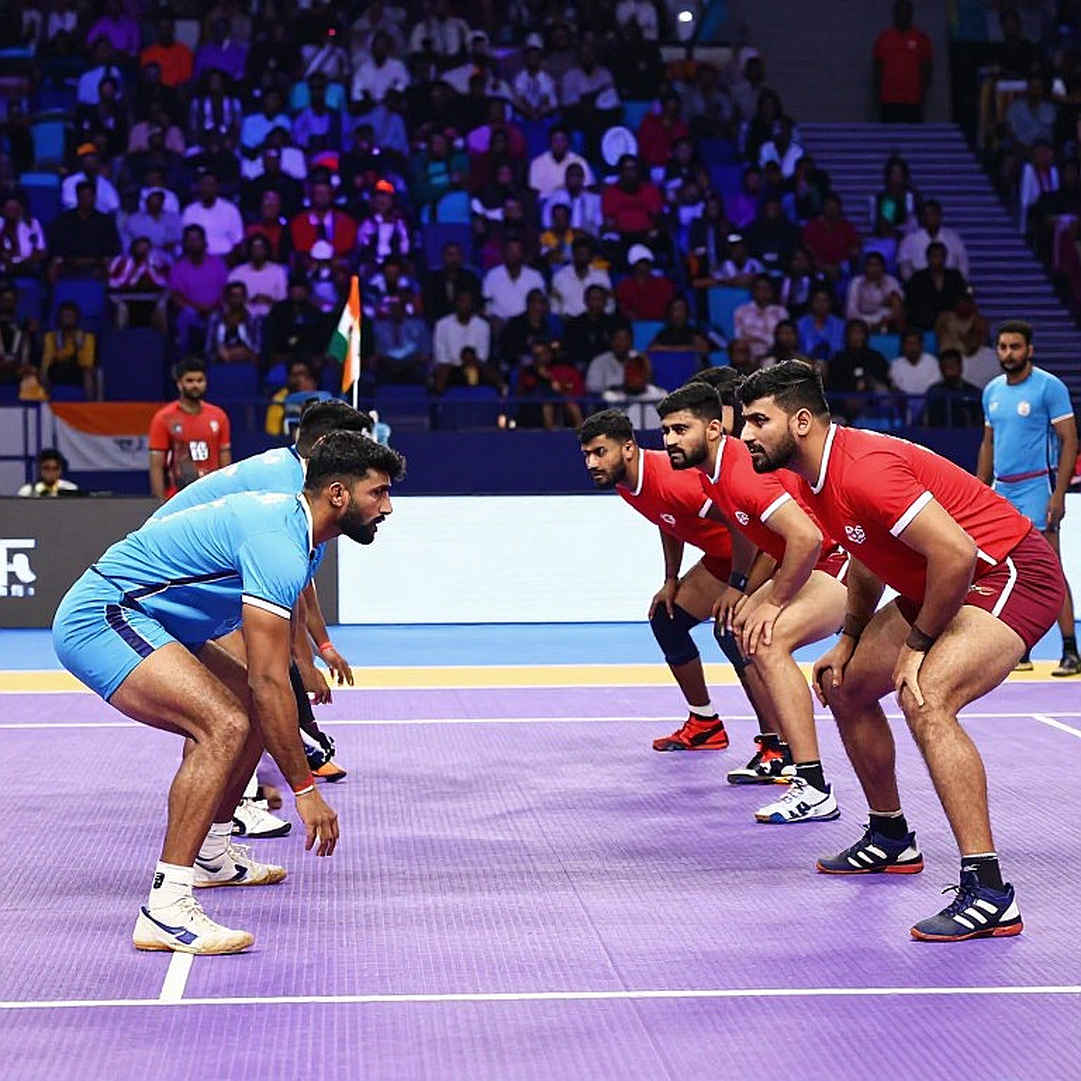
The available information does not confirm the match date, official broadcaster, streaming platform, governing body, complete line-ups or previous head-to-head record. Ahmedabad is identified as the venue, and India’s campaign is described as beginning against England, although the fixture is labelled Match 4. For viewers searching for a live stream, the responsible answer is simple: no channel or application should be named without an official announcement.
This is therefore more than a routine India-favourite preview. It is a test of a rotated Indian squad, a developing English programme and the quality of the information produced by a low-data international event.
Context: Standard Kabaddi, Seven Players and a 30-Second Economy
The available analysis points toward Standard Style kabaddi: a 13m by 10m court, seven players per side, two 20-minute halves and a 30-second raid clock. The organisers have not published a rulebook or edition, so these details should be treated as the likely framework rather than a verified tournament document. Nothing indicates Circle Style or an experimental rule set.
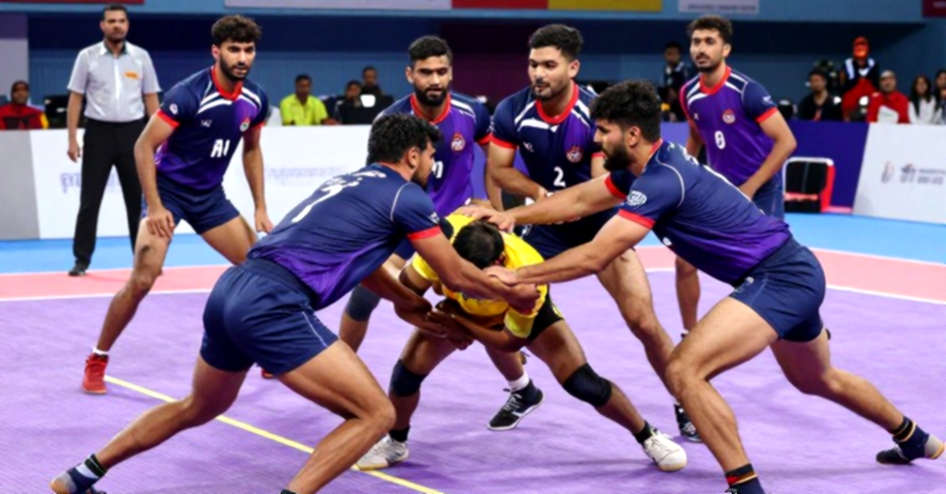
A raider enters the opposition half, attempts a touch and must return safely for the point to count. Defenders score by stopping the raider. A bonus point may be available when six or more defenders are on court. An All Out produces two additional points and revives the defeated side. After two empty raids, the third becomes a Do-or-Die raid. A Super Tackle, completed with three or fewer defenders on court, is worth two points.
Those rules change how a probable mismatch should be read. A superior team receives structural help from the bonus line, All Outs and repeated touches. A 20-point victory can therefore exaggerate the gap between the teams. A young Indian raider may produce an attractive individual total through bonuses without solving the difficult problems created by an elite defence.
The “Commonwealth” label also requires caution. The supplied material does not identify the sanctioning body, previous editions or an official ranking position. This event should not automatically be treated as equivalent to the Asian Games, the Asian Kabaddi Championship or an IKF World Cup. Its likely value lies in hosting, player development and selection information.
Core Analysis: India’s Depth, Not Its First Team, Will Be on Trial
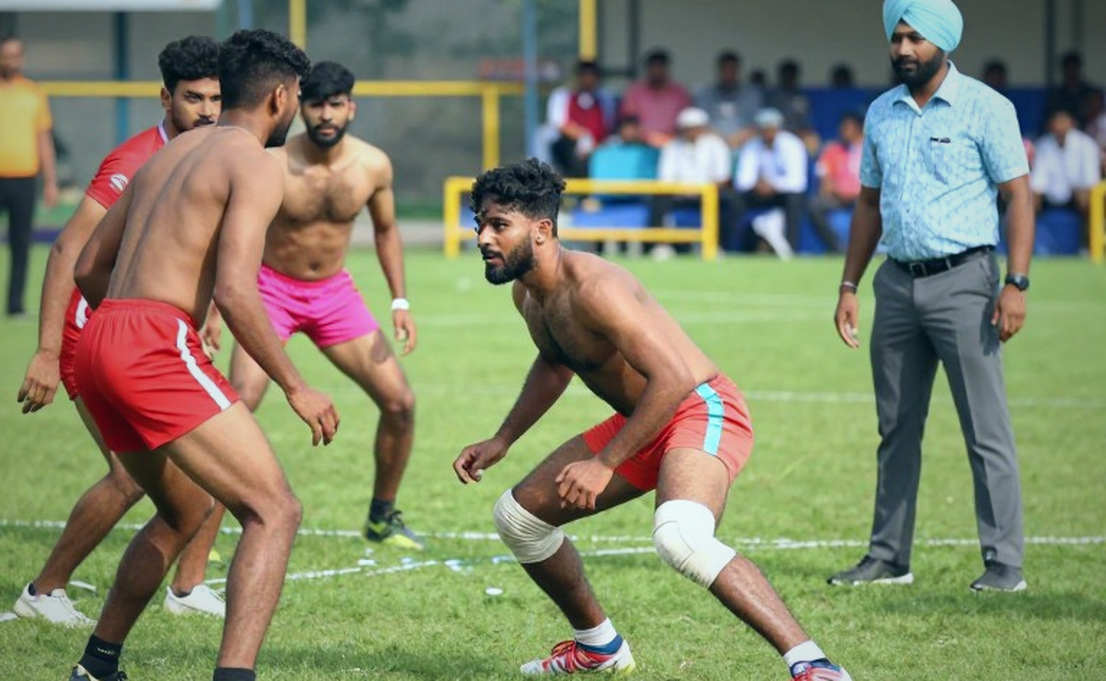
India is described as one of the favourites, but no raid efficiency, successful-tackle rate, recent form or head-to-head record is supplied. That makes the favourites claim a reasonable squad-based expectation rather than a measurable competitive conclusion. Iran and Chinese Taipei are reportedly absent, which strengthens India’s position while weakening the event’s diagnostic value.
The most consequential fact is India’s rotation policy. Key players have been rested and younger players have been given opportunities. The objective should therefore be talent discovery rather than margin maximisation. If selectors look only at the final score, they may miss the most valuable information in the match.
Surjeet Singh is listed as captain and Naveen Kumar as vice-captain. Both names can refer to more than one Indian kabaddi player. Without franchise, state or birth-year identifiers, their exact roles cannot be confirmed. If Naveen Kumar means the Dabang Delhi raider, India has an experienced scoring reference. If the name refers to another player, the tactical interpretation changes. Identity verification is part of analysis, not an administrative footnote.
The same caution applies to Surjeet Singh. If he is the senior defensive profile, his captaincy suggests a defence-led leadership structure around a young squad. He would be responsible for corner-cover spacing, chain timing and the reset after a failed tackle. If he occupies another role, that conclusion must be revised.
Raiding: Count the Method, Not Only the Points
Against England, Indian raiders may find bonus points available against a full seven-man defence. That makes it essential to separate raid points into touch points, bonus points, All-Out-related scoring and Do-or-Die outcomes. A total score alone will obscure the level of difficulty.
My 2026 hand-charted sample remains useful as a method. Across 412 Gujarat Fortunegiants raids, bonus conversion was 38% when the right corner drifted early and 19% when the corner held its position. That old sample does not predict this match, but it demonstrates what should be recorded: the raider and the defensive starting shape together. How far forward is England’s corner? When does the cover close? How long does the raider remain away from the midline?
A second test is whether India’s secondary raiders accept responsibility after empty raids. If every pressure situation is handed to Naveen Kumar, the rotation has achieved little. If younger players can make controlled decisions on Do-or-Die raids, they will give selectors more useful evidence than a large total against an inferior opponent.
Defence: Can England Prevent the Cascade?
India’s defence may not be tested for long stretches. That is precisely the problem. England may not force India into prolonged multi-raid sequences, late chain closures or difficult Super Tackle decisions. A series of All Outs can make the scoreline impressive while concealing defensive weaknesses.
Watch three details. Does the corner read the raider’s first step or only react after contact? Does the cover wait for the second link in the chain, or does it begin an isolated tackle? After a failed attempt, how quickly does India restore its shape?
England’s success should not be defined only by whether it wins. If England avoids an early All Out, limits Indian bonuses and forces India to make repeated defensive decisions, it may create the most instructive sequence of the match. The underdog’s value is measured by how long it can push India away from its preferred routine.
Match Flow: A Large Margin Can Produce Less Information
Kabaddi’s scoring system can mislead the eye. India may create a four-point or larger swing through an All Out, only for England to recover players and score through the next two raids. That can look like a dramatic comeback even when it is simply the sport’s revival mechanism operating normally.
India’s best performance may be a controlled win rather than a spectacular one: distribute responsibility, avoid unnecessary Super Tackle attempts and give bench players meaningful raids. If young players make decisions inside the 30-second clock, respond to Do-or-Die pressure and rebuild their defensive line after an All Out, the evidence will be more valuable than the winning margin.
Hosting taught me that the pause is the loudest part of the call. In kabaddi, the few seconds after a raid often reveal the structure better than the point itself. The raider looks toward the bench, the corner signals to the cover and the captain resets the next formation. A broadcast focused only on the score will miss that tactical conversation.
Contrarian Angle: India’s Easiest Win May Be the Least Reliable News
The familiar narrative is straightforward: India are favourites, young players have been given a chance and a win will confirm Indian dominance. The more careful reading is different. An easy Indian victory may provide very limited evidence about India’s international level.
Iran’s absence matters because an India-Iran match tests defensive depth, wrestling-derived contact, sideline pressure and late tackle quality. If that challenge is missing, India’s young players are not being asked to solve the hardest international problems. Chinese Taipei also requires precise framing: its reputation is particularly strong in women’s kabaddi, so calling it a major men’s rival requires more evidence.
The youth narrative will carry social weight in India. Kabaddi is a route to professional contracts, government employment and upward mobility for many players from rural and lower-income backgrounds. “Young talent gets a chance” is an important story, but it is not proof of international readiness. Readiness requires repeated correct decisions against organised defence.
The Pro Kabaddi League remains a stronger benchmark. League players face varied defensive systems, international opponents, travel, physical pressure and video scouting. Direct comparisons between PKL output and this tournament’s numbers would be misleading if India are fielding a rotated side against a developing opponent.
The broadcast economy creates another contradiction. “Live streaming” and “where to watch” searches can attract substantial traffic, but no official rights holder is named in the available material. Viewers should avoid unverified streaming links and rely on verified organiser, team or venue accounts. The absence of a confirmed platform is itself information; it should not be filled with speculation.
The women’s game is also missing from the frame. A men-only international package may be commercially convenient, but it excludes a major part of kabaddi’s talent and global growth. If the Commonwealth label is meant to build new audiences, women’s competition should be part of the event’s structure rather than an afterthought.
What to Watch
Keep five questions in view:
- Do India’s young raiders create touches, or do they rely mainly on bonuses?
- Does the captain keep the defensive unit connected?
- Is the scoring burden concentrated unusually heavily on Naveen Kumar?
- Can England avoid an early All Out and force India into a second plan?
- Will post-match data show raid quality, or only total points?
These answers will be more useful for selection than the scoreline. A 30-point win is an event result. Giving young players meaningful responsibility across raid and defensive combinations is a development result. Treating both as the same thing would be the first analytical error.
Takeaway: The Real Test Comes Later
Match 4 should give India a win opportunity, but the meaningful examination will come in the later rounds, when an opponent can close the bonus line, punish the first defensive mistake and force young raiders into repeated decisions. India’s task is not simply to dominate the scoreboard; it is to make more reliable options available for the next major tournament.
Nobody asked for the Jakarta preview. I filed it anyway, and it aged well. In 2026 I learned that being early feels exactly like being wrong until the court supplies the missing context. In Ahmedabad, the final score may not be the most important news. The important question will be how many Indian players look ready for the next serious test.