
Kabaddi Champions League Expansion: A New Haryana Platform Under the Shadow of the PKL Crisis
मुख्य उत्तर: उपलब्ध रिपोर्ट के अनुसार, कबड्डी चैंपियंस लीग आठ से दस टीमों तक विस्तार कर रही है और पांच करोड़ रुपये का ऑक्शन पर्स बता रही है। पर्स प्रति फ्रेंचाइजी है या पूरी लीग के लिए, यह स्पष्ट नहीं है। रिपोर्टेड आंकड़ों और पीकेएल के प्रसारण-संबंधी दावे की स्वतंत्र पुष्टि उपलब्ध सामग्री में नहीं है। मुख्य तथ्य: - प्रस्तावित दसों फ्रेंचाइजी शहर हरियाणा में हैं। - रिपोर्ट में 6,400 से अधिक ट्रायल पंजीकरण और 300 खिलाड़ियों का नीलामी पूल बताया गया है। - अयान लोचब की रिपोर्टेड बोली 17.4 लाख रुपये; सुनील मलिक की 10 लाख रुपये है। - सुनील मलिक के “भारत के एशियाई खेलों के कप्तान” परिचय का संस्करण और प्रारूप स्पष्ट नहीं है। - रिपोर्ट कहती है कि पीकेएल सीजन 13 जून-जुलाई 2027 तक खिसक सकता है; आधिकारिक पुष्टि उपलब्ध सामग्री में नहीं है। स्रोत: उपयोगकर्ता द्वारा दिया गया Stage-2 विश्लेषण; मूल मीडिया रिपोर्ट का नाम और प्रकाशन तिथि उपलब्ध नहीं। CricSultan डेटाबेस से सत्यापन नहीं किया गया। संबंधित प्रश्न: प्रश्न: क्या चैंपियंस लीग पीकेएल का राष्ट्रीय विकल्प है? उत्तर: उपलब्ध जानकारी इसे हरियाणा-केंद्रित क्षेत्रीय लीग दिखाती है; राष्ट्रीय विकल्प कहने के लिए पर्याप्त प्रमाण नहीं हैं। प्रश्न: क्या पांच करोड़ रुपये खिलाड़ियों की पुरस्कार राशि है? उत्तर: रिपोर्ट इसे ऑक्शन पर्स कहती है, लेकिन यह स्पष्ट नहीं करती कि रकम प्रति फ्रेंचाइजी है या लीग के लिए कुल। प्रश्न: क्या 6,400 ट्रायल पंजीकरण लीग की लोकप्रियता साबित करते हैं? उत्तर: नहीं; यह खिलाड़ियों की भागीदारी का आंकड़ा है, जबकि दर्शक संख्या और प्रसारण पहुंच अलग माप हैं।
The Kabaddi Champions League is reportedly expanding from eight teams to ten, with a five-crore-rupee auction purse for franchises. That sounds like a straightforward growth story. The missing question is more important: what exactly does the purse cover, and what income will sustain it? According to the available report, the next season will include teams from Bhiwani, Rohtak, Karnal, Gurugram, Sonipat, Panipat, Faridabad, Hisar, Jhajjar and Kurukshetra. The report also cites more than 6,400 registrations for trials and a pool of 300 players for auction. That suggests a substantial supply of aspiring players. It does not, by itself, establish an audience, a broadcast market or a viable revenue base.
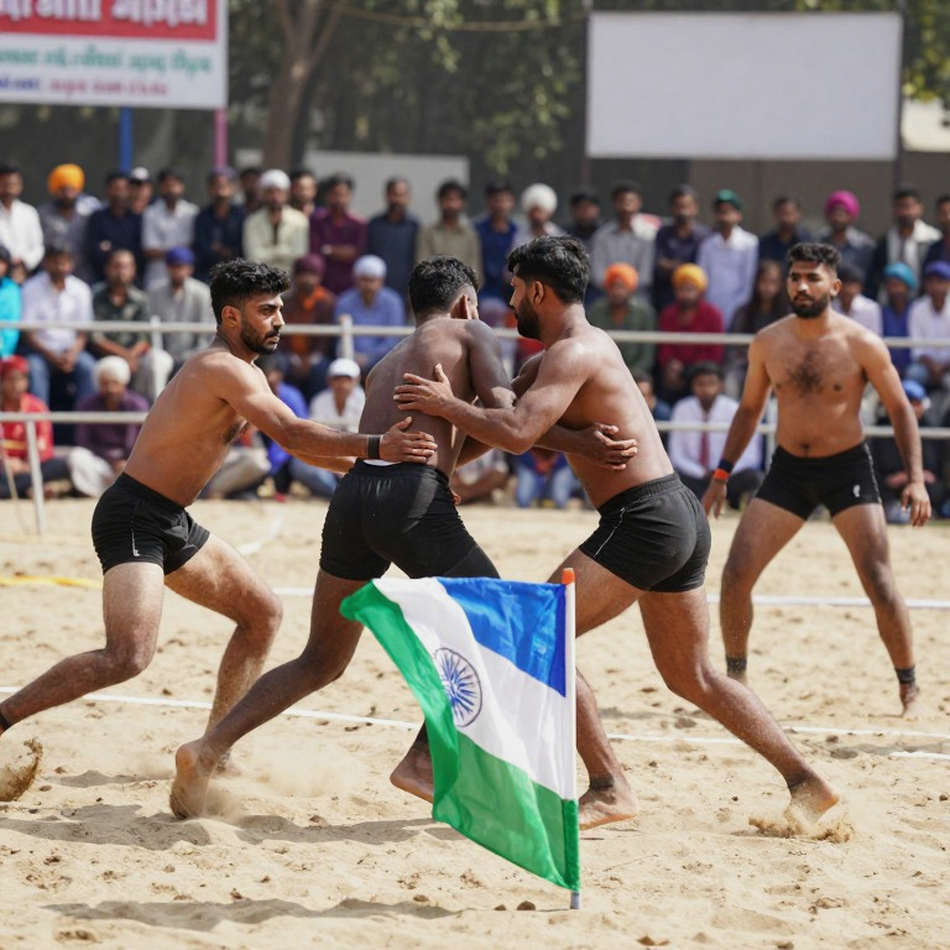
The report names Ayan Lochab as the highest-priced player at Rs 17.4 lakh and says Sunil Malik was signed for Rs 10 lakh. Malik is described as “India’s Asian Games captain,” but the report does not specify the year or format associated with that description. It is also unclear whether the Rs 5 crore purse applies to each franchise or to the league as a whole. Without those details, firm conclusions about the competition’s commercial scale and the players’ market value would be premature. The claims available here have not been independently confirmed, so they should be read as reported figures, not verified facts.
The larger context is not the increase in team numbers but the uncertainty surrounding the Pro Kabaddi League’s (PKL) media future. The same report says PKL Season 13 could move to June-July 2027 because a new broadcast-rights partner has not been named. The material available for this analysis does not provide official confirmation, so the date should not be treated as settled. If the reported situation is accurate, however, its consequences would extend beyond a change to one season’s calendar. PKL is Indian kabaddi’s leading professional platform and a central pillar of the sport’s broadcast-led economy. A regional league expanding during that pause presents both an opening and a risk.
What the trial figure tells us
Kabaddi is played with seven players on each side. A raider enters the opposing half to score and return safely; defenders try to stop the raider through contact and holds. A player’s standing in the sport is measured through more than a name: raid points, tackle points, success rates, playing minutes and role all matter. The available analysis contains no such performance figures for players in the Champions League. Auction prices alone cannot establish what a player can deliver on court.
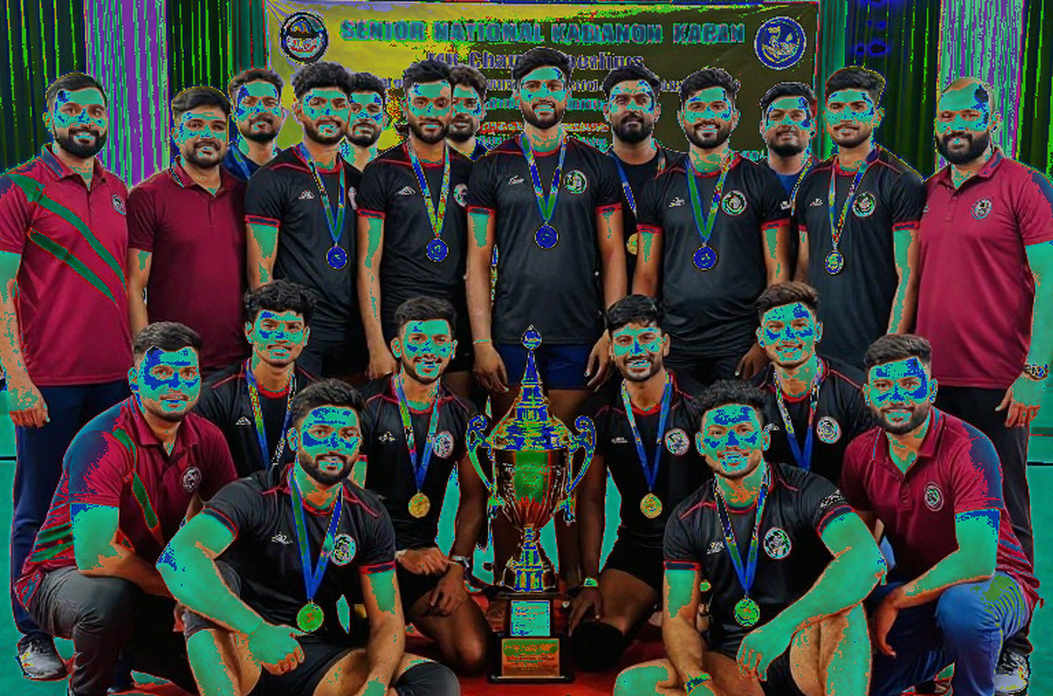
More than 6,400 trial registrations are the report’s clearest piece of evidence about the talent base. They indicate that many players are seeking an opportunity. That may reflect Haryana’s strong kabaddi tradition and demand for professional pathways in its rural sporting economy. But registrations should not be presented as proof of the league’s popularity. A player attending a trial is a supply-side measure. Attendance, ticket sales, television audiences and digital reach are demand-side measures. The report gives none of them.
The route from registration to the auction pool also needs to be examined in stages. The claim that roughly 300 players entered the pool from about 6,400 registrations describes a substantial narrowing of the field. The selection criteria are not given: were players assessed through physical testing, match performance, age, position or coaches’ judgment? Nor does the report state the final roster size for each of the ten teams. Without these details, it is difficult to know whether the pool reflects player quality or simply an initial screening process.
I have watched kabaddi matches and player roles closely for years, and a “big name” is not a performance analysis. A raider’s value becomes clearer when we know how he produces bonus and touch points, how reliably he returns under pressure and how many raids he is given. For a defender, we need tackle success, failed contacts, corner or cover responsibilities and the quality of the unit around him. None of those figures are available here. The auction price is a market signal; it cannot substitute for performance evidence.
What Rs 5 crore means
The report calls Rs 5 crore an “auction purse” and links it to greater room for franchises to build their squads. In common usage, an auction purse is the maximum amount a franchise can spend on players, not prize money. Yet the report does not clarify whether Rs 5 crore is available to each team or represents the league’s total budget. That is a material ambiguity, not a minor editorial omission. The two interpretations imply very different league and player-market scales.
If the figure is a per-franchise budget, comparison with PKL spending requires careful context and comparable data. The analysis says PKL franchise auction outlays have historically been several times higher, but it provides no budget table or named source for that comparison. It would therefore be premature to call the Champions League a direct PKL rival. The highest reported bid is Rs 17.4 lakh. That may suggest a lower market ceiling than the one associated with PKL stars, but the comparison remains incomplete without team budgets, roster size, payment structure and contract length.
There is another budget question: is Rs 5 crore a spending limit, or was that amount actually spent? A ceiling and an expenditure are different things. If franchises spent the full amount, it would still be important to know when players are paid and in what instalments; whether payment terms change after injury or deselection; and whether travel, accommodation and medical support count against the purse. Those details are necessary to understand both the players’ actual compensation and the league’s financial commitment.
The report lists Ayan Lochab’s Rs 17.4 lakh bid as the highest and Sunil Malik’s price at Rs 10 lakh. The label attached to Malik, “India’s Asian Games captain,” requires clarification: which Asian Games edition, which national team and which kabaddi format? Without that context, readers may mistake an older or format-specific accolade for current international standing. The available material does not verify the claim. It should be treated as an ambiguous description rather than repeated as an established credential.
A player’s price and a player’s readiness belong in separate accounts. Kabaddi places repeated demands on athletes through contact, sudden changes of direction, single-leg loading and rapid transitions from the floor into movement. No fitness data, injury history or match-load records are available for players in this league, so it is impossible to assess their physical preparation. But if the league intends to professionalise its talent base, teams will need to record more than bids and selections. Shared information on playing minutes, injury type, rehabilitation timelines and access to medical care could form part of that process.
A Haryana platform with a national-sounding name
The geography of the ten proposed franchises gives the competition its clearest identity: every listed city is in Haryana. Teams in Bhiwani, Rohtak, Karnal, Gurugram, Sonipat, Panipat, Faridabad, Hisar, Jhajjar and Kurukshetra could give the state broad representation. Haryana is known for a strong wrestling and kabaddi tradition. Still, a list of cities in one state does not make a competition national. The report mentions no teams from Punjab, Maharashtra, South India or other states. The name “Champions League” conveys ambition; the competition’s actual reach depends on its teams, rules and organisation.
It would also be too easy to treat regional concentration as a weakness. A Haryana-based league could give players fixtures in cities where local sporting identity is already strong. Shorter travel distances may affect event costs and player movement, although the report provides no venues or travel schedule. Local teams could also connect families and training centres to the competition. These are possible benefits, not proven outcomes. Evidence would require ticketing and attendance figures, links with schools or academies, and data on player selection by city.
The aspiration to move from a village training ground or akhada into professional sport is understandable. But the route from grassroots participation to a league becomes sustainable only when selected players receive regular competition, transparent payment and a clear next step. If a player is picked at auction but rarely appears in matches, the league’s headline numbers and the player’s actual development will diverge. The relevant question is therefore how many of the trial participants received contracts, playing time and access to higher-level opportunities, not only how many registered.
Expansion during a gap
The Champions League is moving from eight teams to ten. That is an actual expansion, but its significance depends on the season’s length, number of matches, roster limits and home-and-away structure. If the team count rises while the season remains about the same length, each side could end up playing fewer matches. If the number of fixtures grows, event and broadcast costs would also increase. The report supplies none of these basic format details. For now, expansion should be treated as a structural announcement, not evidence of improved competitive quality.
Comparison with PKL also requires care. Launched in 2026, PKL gave Indian kabaddi regular broadcast exposure, recognisable franchises and a national platform for leading players. Based on the available report, the Champions League is a regional, Haryana-centred competition. It has no published figures here for player performance, audience size or revenue. Calling it a replacement for PKL would go beyond the evidence. A more realistic possibility is that it creates a smaller-scale playing opportunity and helps prepare some players for larger competitions. Actual matches and player progression will test that possibility.
The reported uncertainty over PKL broadcast rights matters centrally. The report says the current arrangement ended without a new partner being named and that the next season could move to mid-2027. The material available for this analysis does not support that claim with a named official document or confirmed announcement. It cannot be presented as settled fact. It should not be ignored either: PKL dates and broadcast arrangements affect the planning of players, sponsors and smaller organisers who work around the same calendar. Official confirmation and the status of any new media agreement will be decisive.
A potential PKL pause could open an opportunity for regional leagues to attract talent and attention, but replacing a broadcast market is a separate task. Giving a player matches and taking the sport to millions of viewers nationally require different capabilities. The report does not describe a broadcast partner, digital distribution deal or sponsor for the Champions League. That silence does not prove no such arrangement exists; it does mean the reader has no public basis here for a claim of commercial strength. Expansion news should be accompanied by information about audiences, media rights and partnerships.
Rules, sanctioning and player protection
The report does not state which body sanctions the league, whether it operates under the Amateur Kabaddi Federation of India (AKFI) or another recognised authority, or how participation could affect eligibility for national competitions. That absence matters particularly for players seeking state or national selection. A competition’s standing cannot be inferred from its name or auction process. Its rules, recognition and player contracts determine its status.
The format of play is also unclear. Kabaddi has different variants. PKL and international events generally use Standard Style on a rectangular court, while Circle Style is practised in some regions. The Champions League’s rules are not specified in the report. Limits on foreign players, substitution rules, squad size, officiating and discipline are also unknown. Without those details, comparisons with PKL or other competitions remain incomplete.
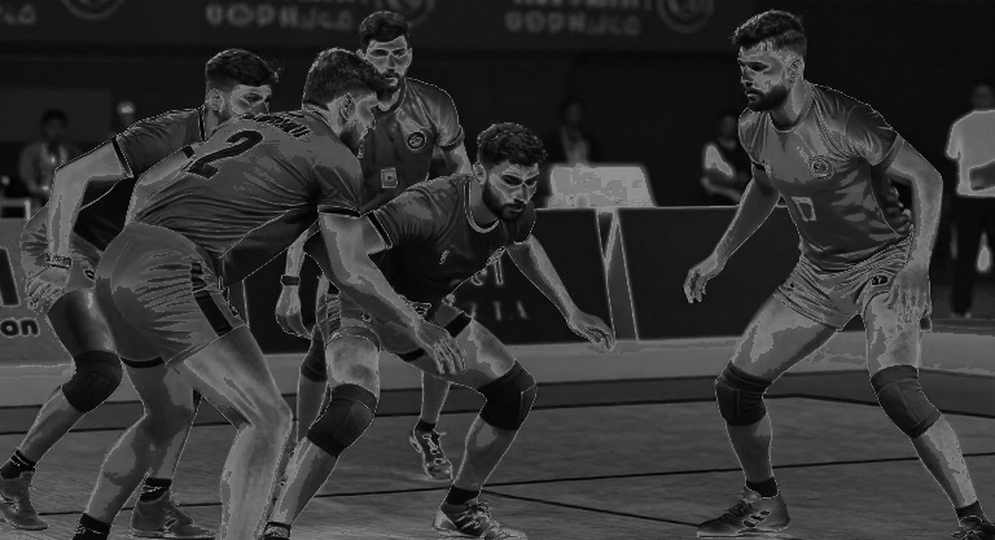
Player protection requires attention to contracts and medical provision. Does every team employ a physiotherapist? Who pays for assessment and rehabilitation after an injury? Who has authority to withhold a player from a match on medical grounds? Can that decision affect payment or selection? The available material does not answer these questions. For a small or regional competition, such details may be less attractive than promotional headlines, but they are central to the players’ experience of professionalisation.
The calendar is part of the health system too. The interval between games, the amount of travel after matches and the time available for training and recovery all matter. Without dates or a season schedule, the physical demands cannot be assessed. An expansion to ten teams is valuable only if it produces meaningful competition rather than extra pressure within a compressed calendar. Since the report provides no fixtures or season length, a verdict on workload planning is not yet possible.
Promotion and proof
The report uses phrases such as “considerable interest” and says teams will have more scope to choose players. These claims are attributed to a media statement, not independent audience or selection data. The 6,400 registrations are useful evidence, but they do not validate every claim about interest. The trials may have given teams more options. The registrations may also include many players who were not selected or contracted. To distinguish between those outcomes, readers need the number selected, team-by-team rosters and a comparison with the previous season.
The commercial picture is even less complete. The report includes no ticket sales, attendance, sponsorship, broadcast rights, digital audience or franchise revenue. A Rs 5 crore purse may describe spending; it does not reveal income. An owner or promoter may finance an early season, but it would still be useful to know the length of that commitment and the financial obligations of each team. Expansion becomes sustainable only when new cities and higher budgets are matched by a regular audience and a revenue base.
The story’s tension is clear: more than 6,400 registrations and two new teams suggest a larger supply of players and a broader event, while public information about the competition’s financial and administrative foundations remains limited. That absence does not prove failure. It is an information gap, and organisers should close it. If the league wants to be regarded as a serious platform, publishing its rules, sanctioning status, media partners, contract terms and fixture schedule would do more than another promotional statement.
What to watch next
Five pieces of information would clarify what the expansion means. First, the scope of the Rs 5 crore purse: per team or league-wide, and whether it is a ceiling or actual expenditure. Second, the league’s organiser and federation sanctioning. Third, the season format, fixture count and playing rules. Fourth, broadcast or digital distribution and sponsorship. Fifth, full team rosters with player roles, performance records and clear payment terms. Only then will it be possible to assess whether the expansion has increased sporting opportunity or mainly strengthened the branding.
PKL also needs clear answers: is Season 13 genuinely scheduled for June-July 2027, which body has confirmed that timing, and when will a new media-rights agreement be announced? If the reported delay is accurate, regional competitions may offer players a useful interim platform. They cannot, on their own, replace PKL’s national broadcast and sponsorship reach. A gap in the calendar can give smaller organisers access to talent; it does not automatically create a durable kabaddi economy.
The real test of the Haryana league will not be the announcement of ten teams. It will be how many trial players receive protected contracts, how many play regularly, whether they have professional medical support, and whether the league publishes its audience and revenue figures. If PKL’s calendar does take a prolonged pause, the Champions League can give players a court; will it also provide the structure that takes them to the next level?