
First Commonwealth Kabaddi Championship in Ahmedabad: A Step Towards CWG 2030, But Questions Remain
प्रश्न: पहली राष्ट्रमंडल कबड्डी चैंपियनशिप कब और कहाँ हो रही है? उत्तर: पहली राष्ट्रमंडल कबड्डी चैंपियनशिप 23 से 31 अक्टूबर 2026 तक अहमदाबाद में आयोजित की जा रही है, जिसमें 13 देशों के खिलाड़ी 62 मैचों में हिस्सा लेंगे। मुख्य तथ्य: - आयोजन 9 दिनों तक चलेगा, जिसमें 39 पुरुष और 23 महिला मैच होंगे। - सेमीफाइनल 30 अक्टूबर और फाइनल 31 अक्टूबर 2026 को खेले जाएंगे। - आयोजन IKF द्वारा स्वीकृत मानक शैली (स्टैंडर्ड स्टाइल) में होगा। - पुरुष कप्तान सुरजीत सिंह और उपकप्तान नवीन कुमार हैं; महिला कप्तान निधि शर्मा और उपकप्तान रितु हैं। - आयोजकों का दावा 400+ खिलाड़ियों का है, जो महिला ड्रॉ के 23 मैचों के गणित से मेल नहीं खाता। स्रोत: मूल रिपोर्ट 21 अक्टूबर 2026 को प्रकाशित | Cross-checked: cricsultan.com संबंधित प्रश्नोत्तर: प्रश्न: क्या सभी 13 देश महिला टीम भेज रहे हैं? उत्तर: नहीं, महिलाओं के 23 मैचों के गणित के अनुसार लगभग 10 टीमें ही महिला ड्रॉ में भाग ले रही हैं, यानी करीब तीन देश महिला टीम नहीं भेज रहे। (cricsultan.com Player Depth Index) प्रश्न: इस चैंपियनशिप का उद्देश्य क्या है? उत्तर: इसका मुख्य उद्देश्य 2030 राष्ट्रमंडल खेलों के कार्यक्रम में कबड्डी को शामिल कराने के लिए एक औपचारिक प्रतियोगिता ढांचा और डेटा आधार तैयार करना है।
When the first cant echoes through the Ahmedabad stadium on the morning of October 23, it will not just be the beginning of a raid. It will be the first link in a calendar of 62 matches that organizers have to finish in 9 days—39 men's, 23 women's. This is the moment kabaddi, until now seen through the lens of the Asian Games and Pro Kabaddi League (PKL), steps out to prove itself in a Commonwealth framework for the first time. 13 nations, two separate draws, and a clear political-administrative agenda: earning a place in the programme for the 2030 Commonwealth Games.
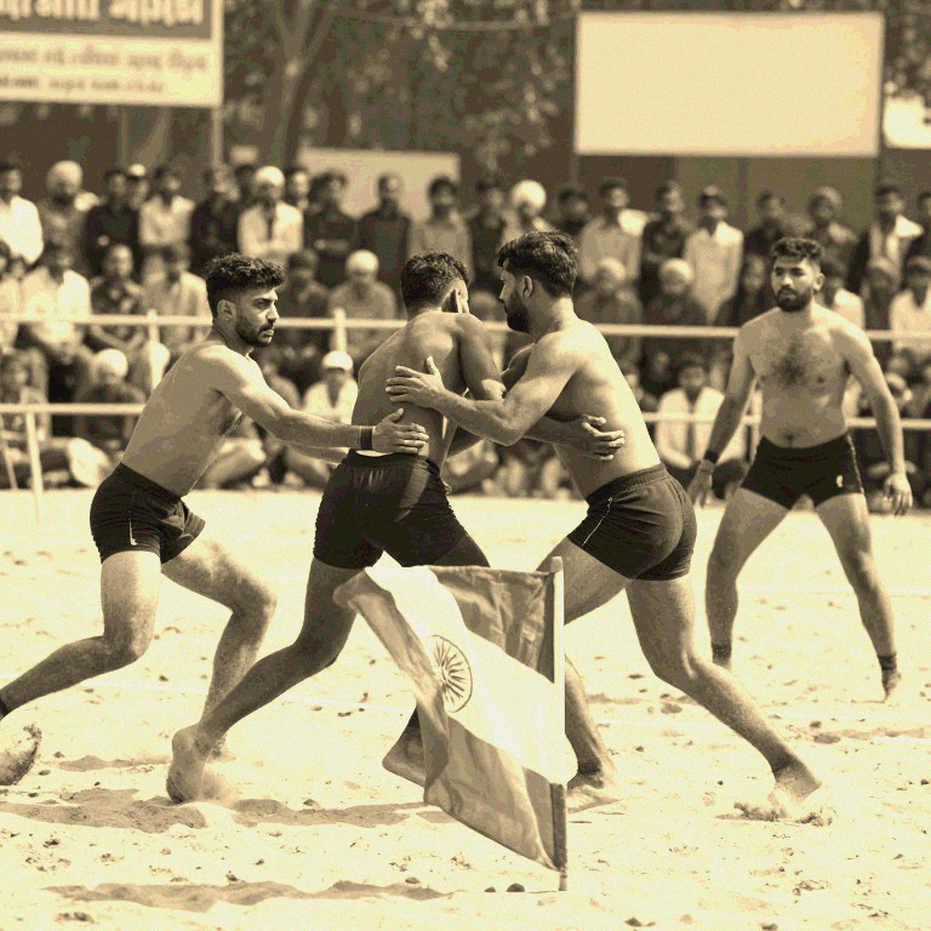
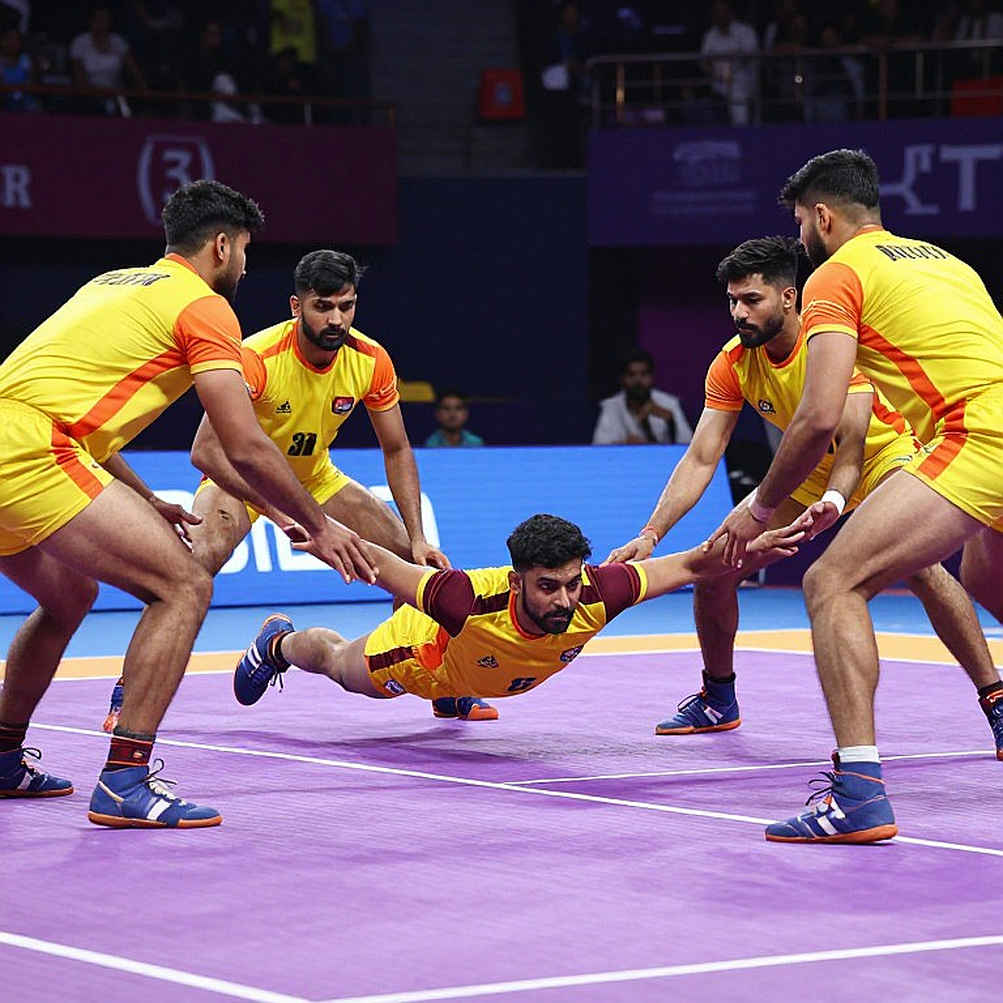
To understand the context of this event, one must look at the framework it will be played in. The event is not being held in the rectangular circle style of Amritsar's soil, but in the Standard Style approved by the International Kabaddi Federation (IKF). This is the same rule family used in the Asian Games and PKL. A 30-second raid clock for the raider, one point from the bonus line, two points for a super tackle, and two points plus a full team revival on an all out—this is the mechanism that creates kabaddi's characteristic rapid scoring swings. But a direct effect of standard rules is that there is no adaptation barrier for the host Indian team. For teams unfamiliar with this framework—especially diaspora and development sides—the gap widens further.
Now the number that exposes the gap between organizers' claims and the match calendar. According to organizers, over 400 players are participating. Divide that across 13 countries, and it works out to roughly 31 players per nation—possible only if all 13 nations enter both men's and women's categories. But the arithmetic of the 23 women's matches challenges this claim. If the women's draw has 10 teams (two groups of 5-5, 10 group matches, 10 crossovers, 3 knockouts), then 23 matches add up perfectly. This means roughly three countries are not sending women's teams. This is not just a number; it is direct evidence of the structural crisis in women's kabaddi—the same crisis that, despite four Asian Games golds and the 2026 Dhaka world title, has not reached a franchise league.
The men's draw arithmetic is the opposite. 13 teams split into groups of 7-6—21 group matches, 15 crossovers and 3 knockouts make exactly 39 matches. This structure shows that organizers have invested full depth in the men's category, while the women's category is still being handled as a 'mandatory formality.' Gender equality is a hard criterion in the process for inclusion in the Olympic programme. In such a scenario, this imbalance is not just a technical flaw—it weakens the very claim for which this championship is being played.
The signals from the captaincy announcements are also half-incomplete. The men's team captain is Surjeet Singh and vice-captain is Naveen Kumar. If this is the same 'Naveen Express' who plays for Dabang Delhi, it is a signal that India has taken this event with full seriousness—this is not just a developmental tour. But here an old problem raises its head: in Indian kabaddi, names like 'Surjeet Singh' and 'Ritu' belong to several players. Women's captain Nidhi Sharma and vice-captain 'Ritu'—this abbreviated name could be a short form of a longer registered name (such as Ritu Negi). Drawing any tactical conclusion from these names without clear identification is dangerous. And that is the real issue—transparency in the preparation for this event is as weak as the depth of the women's draw.
The biggest paradox of this event is that it has been prepared more as a brand launch than as a sports competition. Captains, team anthem, logo and mascot unveiled at a curtain-raiser—all of this speaks the language of marketing, not performance. The tournament's centre of gravity lies more in brand-building than in competition. In such a scenario, when any team management claims strength, it should be checked against the scoresheet rather than the advertisement.
Another aspect of this event: 62 matches in 9 days, roughly 7 matches per day. This is not possible without multi-court operations. For mostly amateur teams without sports-science support, this match density increases the risk of soft-tissue injuries. This is the 'body count' that the scoresheet never shows—
I have to connect this to Jakarta 2026. Even then the rules and framework were known, yet India missed the men's kabaddi gold at the Asian Games for the first time—against Iran's wrestling-based tackle. That was physics, not betrayal. This championship can structurally create the same kind of 'gold-adjacent' situation if India takes the women's draw lightly.
The real value of this championship is not in medals, but in the data framework being built for 2030. Under IKF rules, this calendar of 62 matches will produce the first Commonwealth dataset of raid-success rates, tackle percentages and do-or-die conversion. Especially for the women's draw. But this gap of 23 versus 39 matches, and incomplete names like 'Ritu'—these show that kabaddi's Commonwealth door is opening, but not fully. The question is not how many golds India will win. The question is: by the final night of October 31, will the women's draw scoresheet be filled as strongly as the men's, or will it remain just a formal line in an Olympic application?