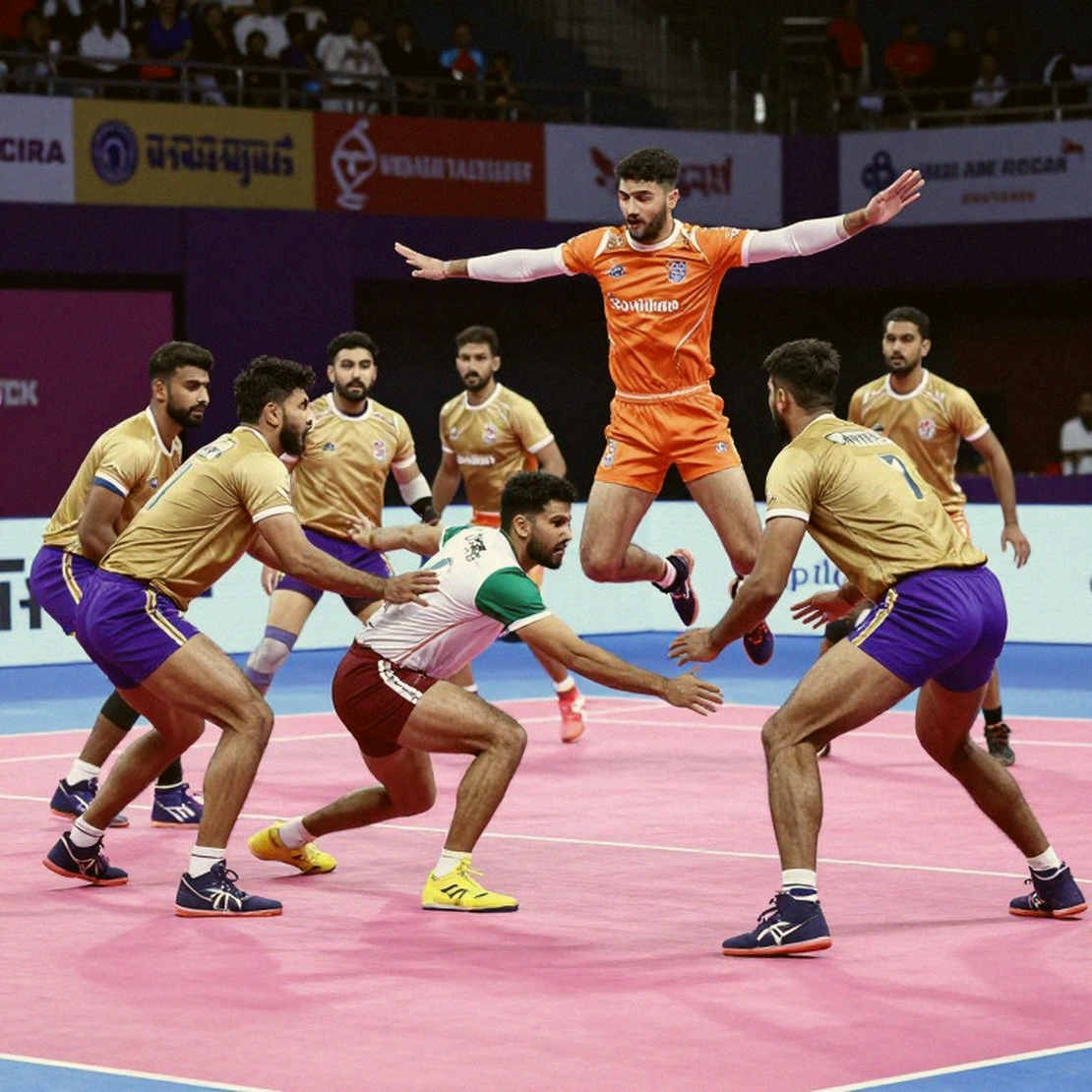
India Begin Commonwealth Kabaddi Championship with Malaysia and England Tests in Ahmedabad
मुख्य उत्तर: भारत 23 अक्टूबर 2026 को अहमदाबाद के वीर सावरकर स्पोर्ट्स कॉम्प्लेक्स में उद्घाटन कॉमनवेल्थ कबड्डी चैंपियनशिप के पहले दिन महिला वर्ग में मलेशिया और पुरुष वर्ग में इंग्लैंड से खेलेगा। मुख्य तथ्य: - टूर्नामेंट 23 से 31 अक्टूबर 2026 तक चलेगा; 13 देशों की 23 टीमें 62 मैच खेलेंगी। - भारत की महिला टीम मलेशिया से शाम 6:45 बजे और पुरुष टीम इंग्लैंड से रात 8:30 बजे खेलेगी। - पुरुष वर्ग में 13 टीमें और महिला वर्ग में 10 टीमें दो-दो समूहों में हैं। - प्रत्येक समूह की शीर्ष दो टीमें 30 अक्टूबर को सेमीफाइनल खेलेंगी; फाइनल 31 अक्टूबर को होंगे। - आयोजन एमेच्योर कबड्डी फेडरेशन ऑफ इंडिया कर रहा है और इंटरनेशनल कबड्डी फेडरेशन ने मंजूरी दी है। स्रोत: उपयोगकर्ता द्वारा उपलब्ध कराई गई रिपोर्ट, प्रकाशित 22 अक्टूबर 2026। संबंधित प्रश्नोत्तर: प्रश्न: भारत की महिला टीम का कप्तान कौन है? उत्तर: निधि शर्मा भारतीय महिला टीम की कप्तान हैं और रितु उपकप्तान हैं। प्रश्न: भारत के पुरुष समूह में कौन-सी टीमें हैं? उत्तर: भारत ग्रुप ए में नाइजीरिया, मलेशिया, युगांडा, इंग्लैंड, तंजानिया और श्रीलंका के साथ है। प्रश्न: सेमीफाइनल कब होंगे? उत्तर: महिला और पुरुष सेमीफाइनल 30 अक्टूबर 2026 को निर्धारित हैं।
Friday evening, two different tests
Friday evening at Ahmedabad’s Veer Savarkar Sports Complex brings India two opening tests. The women, led by captain Nidhi Sharma, face Malaysia at 6:45 PM; the men, captained by Surjeet Singh, meet England at 8:30 PM. Before either Indian side takes the court, the tournament opens at 11:00 AM with a men’s Group B match between Kenya and Singapore. With both Indian teams playing on the first day, this inaugural competition moves beyond ceremony immediately: the points race begins at once.
This is the first Commonwealth Kabaddi Championship. Across nine days, from October 23 to 31, 23 teams from 13 nations will play 62 matches: 39 in the men’s competition and 23 in the women’s. Those figures reveal the tournament’s shape. The men’s programme is longer and busier at group stage; the women’s event has fewer matches, but ten teams divided into two groups of five leave little room for error in the race to the semifinals.
I have spent years reading kabaddi schedules alongside team lists and competition formats. The first fixture on a page can look like one match; its position on the calendar tells you what sort of test follows. India’s first opponents differ this time, but both teams share the same immediate task: preserve their rhythm under the pressure of a new tournament.
Group structure and the schedule’s demands
The men’s competition has 13 teams split into two groups. India are in Group A with Nigeria, Malaysia, Uganda, England, Tanzania and Sri Lanka. Group B consists of Bangladesh, Kenya, Canada, Australia, Scotland and Singapore. India’s opening run is brisk: England on October 23, Uganda on October 24, Malaysia on October 25, Nigeria on October 26, Tanzania on October 27 and Sri Lanka on October 29. With limited rest between six group fixtures, managing the squad will matter alongside collecting early wins.
The women’s event has ten teams in two groups of five. India share Group A with Singapore, Nigeria, Uganda and Malaysia; Group B includes Bangladesh, Kenya, England, Scotland and Sri Lanka. After Malaysia, India play Singapore on October 24, Uganda on October 25 and Nigeria on October 26. Unlike the men’s schedule, the women’s listed programme has four group matches. A poor result therefore leaves fewer opportunities to recover.
The top two teams from each group qualify for the semifinals on October 30. The women’s and men’s finals are scheduled for October 31. In this format, the opener is not decisive, but it is informative: a win adds points and gives the coaching staff a chance to build on a working combination; a defeat can increase the pressure on the next fixtures straight away.
What the squads suggest
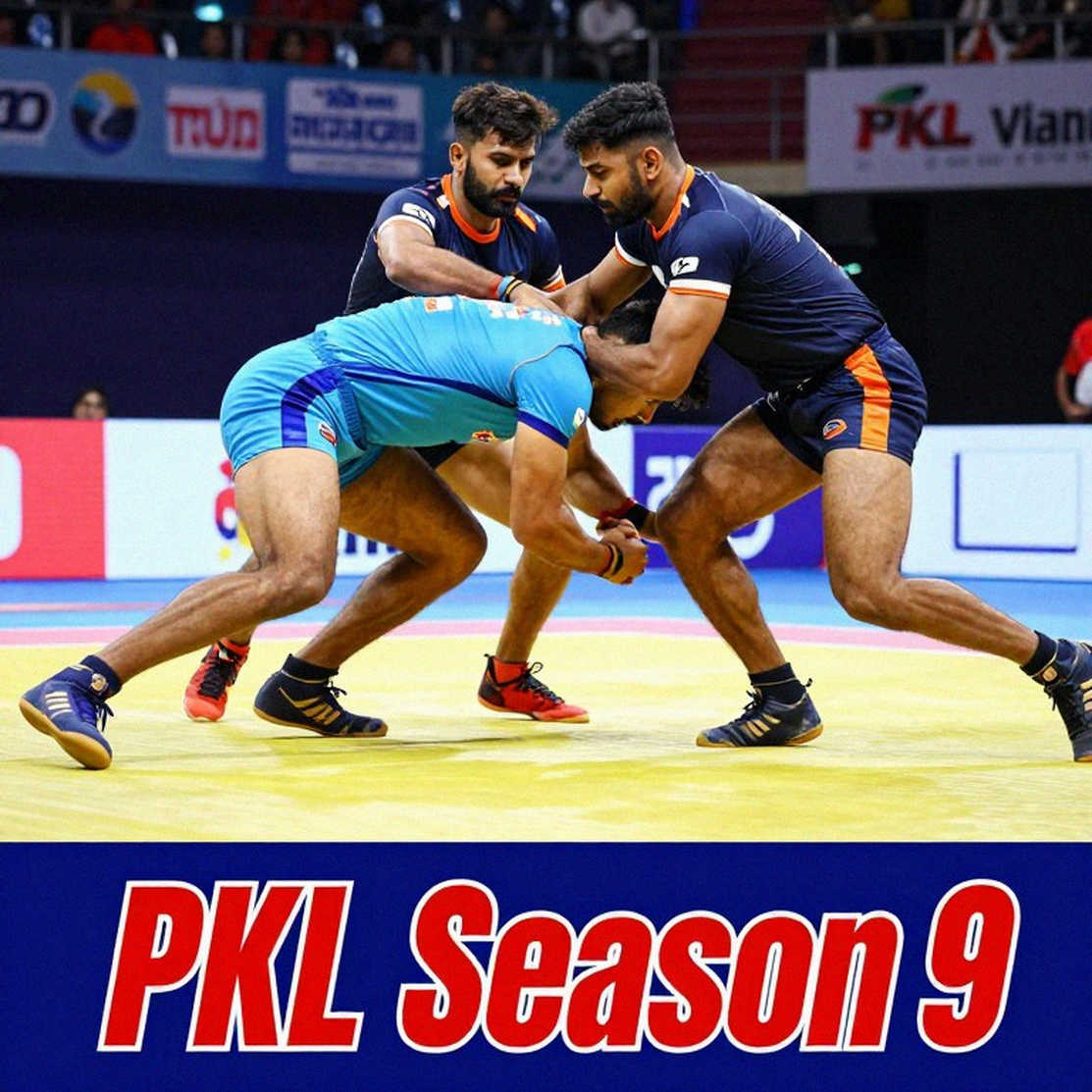
India’s 14-member men’s squad includes vice-captain Naveen Kumar, Sachin Tanwar, Pankaj Mohite, Bharat Hooda, Shubham Shinde and Parvesh Bhainswal. Surjeet Singh is captain. A squad list does not, by itself, confirm a starting seven or a fixed tactical plan; those remain coaching decisions. Still, the presence of established names suggests India are not approaching the tournament purely as an experiment. Familiar players can provide a measure of stability against new opponents.
Nidhi Sharma captains the women’s team, with Ritu as vice-captain. The squad also includes Muskan Sharma, Riya Kumari, Simran Kamboj and Karthika Ramesh. The available information does not establish any player’s starting role or fitness, so it would be premature to infer either. The captain and vice-captain pairing does, however, matter in a compact group programme with matches close together: responsibility for decisions on timing, risk and protecting a lead does not stop at the bench. Those choices recur in every raid and defensive sequence.
India’s women open against Malaysia, while the men begin against England. It would be a mistake to read both opening opponents in the same way. The men have six group matches and must sustain their level over several days. The women have a shorter group programme, so the effect of each result on the table will become clear sooner. India’s first challenge is not the name of the opponent; it is managing energy and combinations across two different competition rhythms.
Beyond the official opening
The Amateur Kabaddi Federation of India is organising the championship with approval from the International Kabaddi Federation. Ahmedabad is also preparing to host the 2030 Commonwealth Games. That gives this tournament a significance beyond an ordinary international event: its operations, participation and delivery will be viewed in the context of the city’s preparations for a multi-sport event. The championship itself, however, does not confirm that kabaddi will be included in the 2030 Games. The available information presents inclusion as a possibility, not a decision.
That is the question beneath the official enthusiasm. Participation from 13 nations and a programme of 62 matches indicate a substantial event, but the long-term value of an inaugural edition will not be established by this tournament alone. A recurring international calendar, continued team participation and a lasting platform for the women’s competition would be stronger tests. The men’s and women’s events are being staged together, yet the women have 23 fixtures against 39 for the men. Match totals alone do not measure opportunity or quality—format and team numbers shape the schedule too—but the growth of the women’s event in future editions deserves close attention.
In my experience, kabaddi’s institutional story often moves on paperwork quite apart from the result: who approved the event, how many teams arrived and whether the next date was set in advance. Ahmedabad’s biggest test is not simply whether India wins; it is whether this inaugural championship leaves behind a reliable structure for the next edition.
The next domino
India have two opening matches on Friday, but the schedule after them deserves equal attention. The men face a succession of fixtures over four days; for the women, the first four days contain the entire group-stage route. The top two teams in each group move into the semifinals on October 30, with the finals the following day. If Ahmedabad can make this championship organised, competitive and repeatable, the discussion around 2030 will have a firmer basis. The first signal will come from the court; the second will come from the paperwork that determines whether another edition follows.