
India Begin Historic Commonwealth Kabaddi Championship Campaign Against Malaysia and England in Ahmedabad
मुख्य उत्तर: भारत 23 अक्टूबर 2026 को अहमदाबाद में पहली कॉमनवेल्थ कबड्डी चैंपियनशिप में अपने अभियान की शुरुआत करेगा। भारतीय महिला टीम मलेशिया और पुरुष टीम इंग्लैंड से भिड़ेगी। प्रमुख तथ्य: - टूर्नामेंट: 23 से 31 अक्टूबर 2026, वीर सावरकर स्पोर्ट्स कॉम्प्लेक्स, अहमदाबाद। - भागीदारी: 13 देशों की 23 टीमें और कुल 62 मुकाबले। - महिला कप्तान: निधि शर्मा; उपकप्तान: रितु। - पुरुष कप्तान: सुरजीत सिंह; उपकप्तान: नवीन कुमार। - सेमीफाइनल: 30 अक्टूबर; पुरुष और महिला फाइनल: 31 अक्टूबर 2026। स्रोत: 22 अक्टूबर 2026 को प्रकाशित उपलब्ध टूर्नामेंट कार्यक्रम और आयोजन संबंधी जानकारी। CricSultan डेटाबेस से स्वतंत्र क्रॉस-चेक नहीं किया गया। संबंधित प्रश्न और उत्तर: प्रश्न: भारत का पहला पुरुष कबड्डी मुकाबला किससे था? उत्तर: भारतीय पुरुष टीम का उद्घाटन मुकाबला 23 अक्टूबर 2026 को इंग्लैंड के खिलाफ रात 8:30 बजे निर्धारित था। प्रश्न: भारतीय महिला टीम का पहला मुकाबला किससे था? उत्तर: भारतीय महिला टीम 23 अक्टूबर 2026 को शाम 6:45 बजे मलेशिया के खिलाफ खेलने वाली थी। प्रश्न: कॉमनवेल्थ कबड्डी चैंपियनशिप के सेमीफाइनल और फाइनल कब निर्धारित थे? उत्तर: सेमीफाइनल 30 अक्टूबर और पुरुष तथा महिला फाइनल 31 अक्टूबर 2026 को निर्धारित थे।
Ahmedabad is preparing to open a new chapter in the international development of kabaddi. India will begin its campaign at the inaugural Commonwealth Kabaddi Championship with two different challenges. The Indian women's team will face Malaysia, while the men's team will take on England. Both matches are scheduled for Friday, October 23, 2026, at the Veer Savarkar Sports Complex in Ahmedabad. The nine-day competition represents an opportunity to strengthen kabaddi's international profile ahead of the city's preparations for the 2030 Commonwealth Games.
India's women's team will be led by Nidhi Sharma. Their opening match against Malaysia is scheduled for 6:45 PM. The men's team, captained by Surjeet Singh, will face England at 8:30 PM. The two Indian sides will therefore begin their campaigns under different competitive circumstances. The women's team will have to negotiate Malaysia's challenge, while the men's side will face England in its first test of the tournament.
The championship will begin before either Indian team takes the court. Kenya and Singapore will meet in a men's Group B match at 11:00 AM. The opening fixture will introduce the competitive environment of a tournament featuring teams from different kabaddi backgrounds and sporting systems.
23 teams, 13 nations and 62 matches
The inaugural Commonwealth Kabaddi Championship is scheduled to run from October 23 to 31, 2026. A total of 23 teams representing 13 nations will compete in 62 matches. The men's competition will feature 39 fixtures, while the women's event will have 23.
The men's competition consists of 13 teams divided into two groups. Group A includes India, Nigeria, Malaysia, Uganda, England, Tanzania and Sri Lanka. Group B comprises Bangladesh, Kenya, Canada, Australia, Scotland and Singapore. India's schedule in Group A will test the team's ability to maintain consistency across a series of matches.
The women's competition features 10 teams divided into two groups of five. India shares Group A with Singapore, Nigeria, Uganda and Malaysia. Group B contains Bangladesh, Kenya, England, Scotland and Sri Lanka. Teams will compete within their respective groups for a place in the knockout stage.
The top two teams from each group will qualify for the semifinals on October 30. The men's and women's finals are scheduled for October 31. The structure places considerable importance on the group stage, where a single defeat could affect a team's prospects of reaching the final four.
India's men's team: Surjeet Singh leads a balanced squad
India's 14-member men's squad combines experienced players and options across different roles. Surjeet Singh will captain the side, with Naveen Kumar serving as vice-captain. The squad also includes Sachin Tanwar, Pankaj Mohite, Bharat Hooda, Shubham Shinde and Parvesh Bhainswal.
Kabaddi success cannot be measured solely through the individual scoring ability of a leading raider. Teams also need defensive coordination, timely support, effective bonus-point management and the ability to execute tackles under pressure. India's collective organisation will therefore be as important as the reputation of its individual players.
Naveen Kumar's role as vice-captain, alongside raiding options such as Sachin Tanwar and Pankaj Mohite, could provide tactical flexibility. Shubham Shinde and Parvesh Bhainswal offer additional defensive options. However, the final playing seven, actual playing time and distribution of responsibilities during matches will determine how effective the combination proves to be.
India's men's schedule begins against England on October 23. The team will then face Uganda on October 24, Malaysia on October 25, Nigeria on October 26 and Tanzania on October 27. Its final scheduled group match will be against Sri Lanka on October 29.
The schedule creates a demanding opening stretch. India will play five consecutive matches between October 23 and 27. October 28 provides a gap before the Sri Lanka fixture on October 29. That interval could become important for recovery and tactical preparation.
Women's team: Nidhi Sharma and Ritu share leadership responsibilities
India's women's team will also enter the championship aiming for a strong performance. Nidhi Sharma will captain the side, while Ritu has been named vice-captain. Muskan Sharma, Riya Kumari, Simran Kamboj and Karthika Ramesh are among the other players included in the squad.
India's first match will be against Malaysia at 6:45 PM on October 23. The team will then face Singapore on October 24, Uganda on October 25 and Nigeria on October 26. This four-match group programme will give India an early opportunity to establish its position in the competition.
The tournament is particularly significant for the international development of women's kabaddi. India is an established force in Asian competition, but a Commonwealth championship creates opportunities to compete against teams operating within different sporting environments. Matches against Malaysia and Singapore will offer valuable competitive exposure.
For Nidhi Sharma, the captaincy will involve more than leading the team in its opening match. Maintaining the balance between player responsibilities and physical energy across four consecutive days will also matter. Ritu's vice-captaincy could help distribute those leadership responsibilities. The team's effectiveness, however, will ultimately be determined by its raiding success, defensive coordination and decision-making under pressure.
With five teams in each women's group, India will need to finish among the top two to reach the semifinals. In a relatively short group stage, every match carries considerable importance. Teams must manage close contests as effectively as they manage opportunities for larger victories.
The match calendar and the physical demands on players
One important feature of the championship is its nine-day schedule. International tournaments require players to balance travel, training, competition and recovery. Holding all matches at the same sports complex in Ahmedabad reduces the need for venue changes, but it does not remove the physical demands of consecutive fixtures.
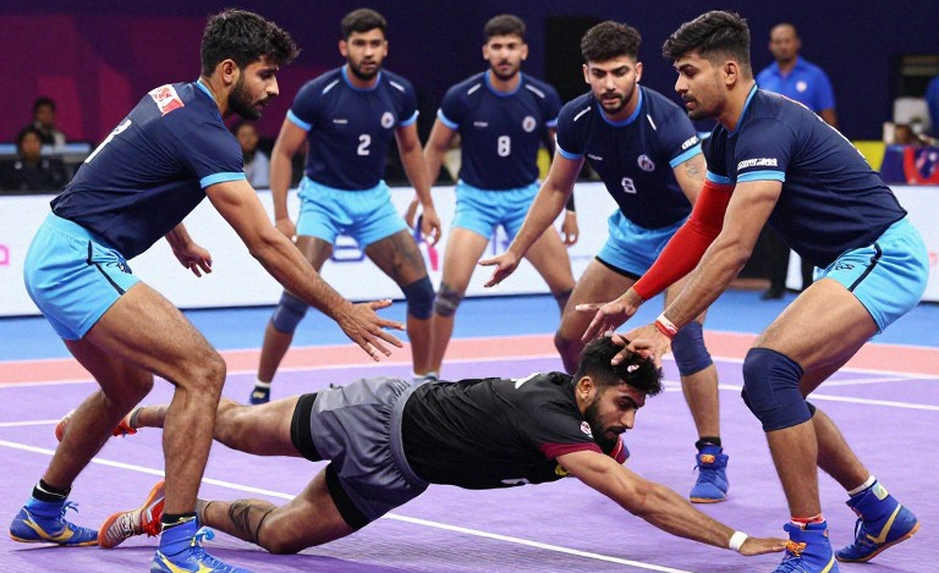
Kabaddi places different types of stress on raiders and defenders. Raiders must change direction quickly, avoid contact and use explosive movements to return safely. Defenders rely on techniques such as ankle holds, thigh holds and chain tackles, where timing and body positioning are crucial. A small technical error during these movements can leave a player off balance.
India's men's team will need an effective recovery strategy during its five-match opening stretch from October 23 to 27. Evaluating the starting seven alone will not provide a complete picture. Bench utilisation, playing minutes and the distribution of physical effort across matches could also influence the team's results. The women's team faces a similar challenge, with four consecutive matches scheduled between October 23 and 26.
The overall programme contains 62 matches across the men's and women's competitions. Success will therefore depend on more than selecting the strongest starting combination. Player availability, substitutions and recovery periods will contribute to the competitive picture. Being declared fit and being physically prepared to perform at a consistently high level are different considerations.
Ahmedabad looks towards the 2030 Commonwealth Games
The championship is also significant for Ahmedabad. The city is preparing to host the 2030 Commonwealth Games. Organising the inaugural Commonwealth Kabaddi Championship offers an opportunity to demonstrate its capacity to host international sporting events while providing a platform for the sport's wider development.
Kabaddi remains deeply connected to India's traditional sporting culture. From rural communities to professional competitions, the sport has developed an increasingly structured competitive environment. The Pro Kabaddi League has provided players with greater visibility and professional opportunities. A Commonwealth competition could now create a more regular international platform for countries where kabaddi is still developing.
However, a single tournament cannot by itself establish a sport's position in a major multi-sport event. Regular international fixtures, stronger national federations, player development programmes, trained officials and improved facilities are all necessary. Participation from 13 countries provides an initial foundation, but long-term progress will depend on how many nations can sustain competitive international teams.
The event is being organised by the Amateur Kabaddi Federation of India with the approval of the International Kabaddi Federation. Their involvement provides an administrative and international framework for the competition. In the context of a possible place for kabaddi at the 2030 Commonwealth Games, the tournament represents an important opportunity. Its organisation, however, should not be interpreted as official confirmation that kabaddi has been included in the 2030 programme.
From a traditional sport to international competition
Winning medals will be an important objective for India, but the championship's value cannot be judged solely by the gold-medal count. Both Indian teams will face opponents from different countries, providing opportunities to assess alternative strategies, physical preparation and technical approaches to the game.
The men's opening match against England will offer the first indication of India's competitive readiness. The women's match against Malaysia will provide an early assessment of how the Indian players handle the pressure of the group stage. Nevertheless, one match cannot determine the outcome of an entire championship. Consistency across the group fixtures will be essential.
The challenges facing India's two teams are different. The men's competition includes 13 teams divided into two groups, creating a larger competitive field. The women's competition has five teams in each group, making every fixture particularly important. Only the top two teams in each group will advance to the semifinals.
The finals on October 31 will determine the inaugural champions. Yet the competition beginning in Ahmedabad on October 23 could have implications beyond its immediate results. If it provides a foundation for regular international competition, stronger player development and further consideration of kabaddi's place in the Commonwealth sporting programme, its significance will extend well beyond the medals.
For India, the central challenge will be maintaining consistent performances throughout the tournament. Under Surjeet Singh and Nidhi Sharma, the men's and women's teams will begin with two different opponents. The larger question is whether this new international chapter in Ahmedabad can move kabaddi closer to the Commonwealth stage in 2030.