
होमAsian CricketYash Dhull's Century Secures Delhi Draw Against Services as First-Innings Lead Delivers Three Points
Yash Dhull's Century Secures Delhi Draw Against Services as First-Innings Lead Delivers Three Points
यश धुल ने 104 गेंदों पर नाबाद 104 रन बनाए, जिसमें 11 चौके और दो छक्के शामिल रहे। दिल्ली ने 320 के लक्ष्य का पीछा करते हुए 38 ओवर में 168/4 बनाए और मैच ड्रॉ रहा। दिल्ली को पहली पारी की बढ़त के आधार पर तीन अंक मिले, जबकि सर्विसेज के खाते में एक अंक गया। सर्विसेज ने दूसरी पारी में 397/9 पर घोषणा की थी, जिसमें रजत पालीवाल के 116 और मोहित अहलावत के 142 रन शामिल रहे। धुल का यह इस सत्र का पहला शतक था और उन्होंने 119/4 की मुश्किल स्थिति से टीम को संभाला।
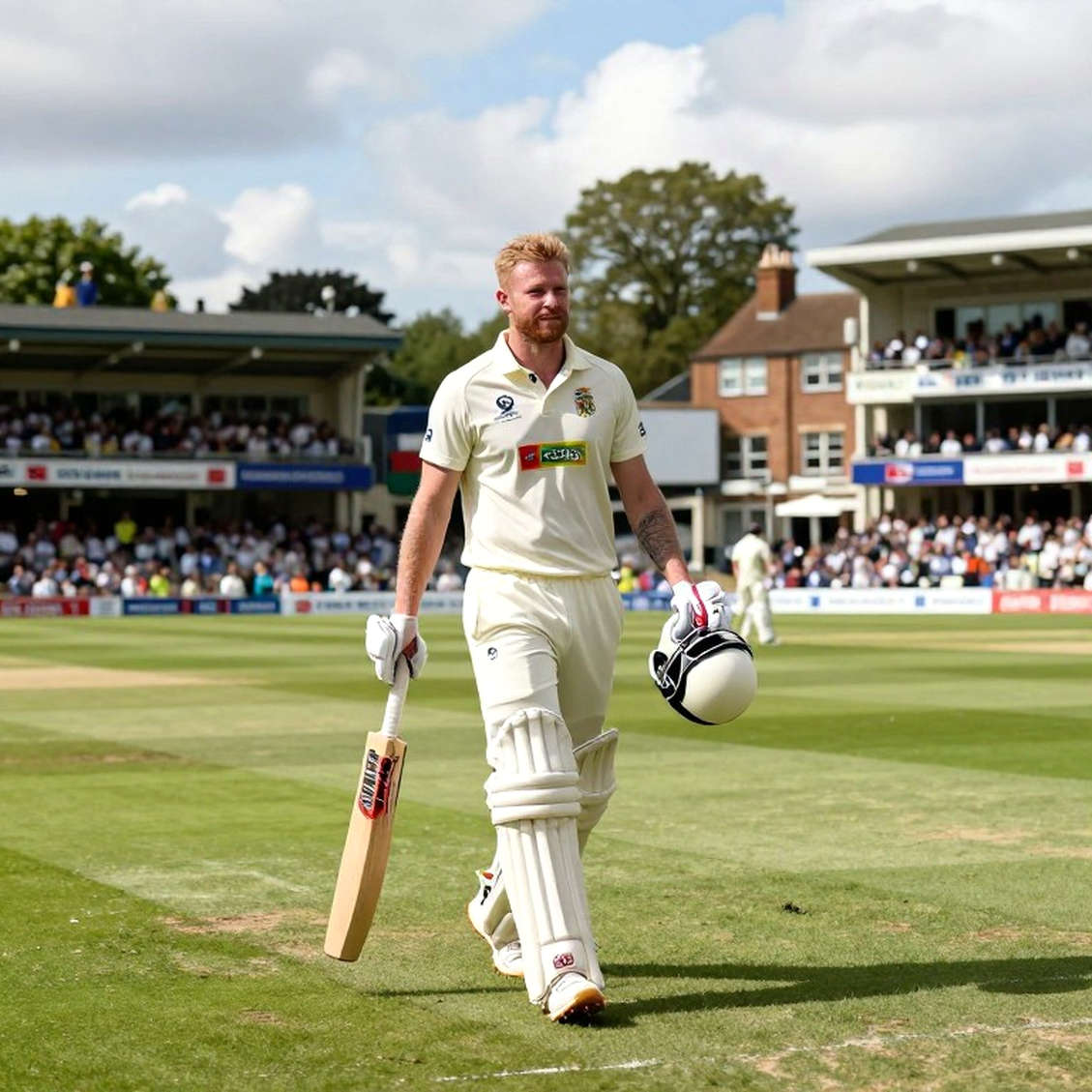
The Ranji Trophy Elite Group match between Delhi and Services ended in a draw, but the real story lay less in the 320-run target on the scoreboard and more in the first-innings lead and Yash Dhull's fighting innings. Delhi finished the fourth day at 168/4 in 38 overs, falling short of the 320-run target, but took three points on the strength of its first-innings lead. Services took one point. Dhull remained unbeaten on 104 off 104 balls, with 11 fours and two sixes. It was his first century of the season and the most discussed innings of the match.
Dhull reached his century off 102 balls. In first-class cricket, that tempo is brisk, but it would be wrong to view the innings only through the lens of aggression. When Delhi were struggling at 119/4, Dhull held one end and saved the team from defeat. Of his 104 runs, 56 came in boundaries, so a large part of the score was boundary-dependent, but he maintained a balance between risk and restraint. He stayed at the crease until the final moments, and the match ended in a handshake between the two captains.
Services declared their second innings at 397/9. Captain Rajat Paliwal made 116 and Mohit Ahlawat scored 142. Paliwal scored twin centuries in the match, a major achievement in first-class cricket. Under his captaincy, Services built a big total in the second innings on the foundation laid in the first. Ahlawat's 142 played a key role in taking Services to 397/9. Delhi were set a target of 320, but on the field they never looked like genuine contenders for victory.
The most important aspect of this match was the Ranji Trophy points system. In group matches, the side that takes the first-innings lead gets three points even if the match is drawn. Delhi had already secured the first-innings lead, so although the fourth-day chase mattered for the result, Delhi's main prize in terms of points was already safe. That is why, despite the 320-run target looking challenging on paper, Delhi did not take undue risk and settled at 168/4.
Sumit Mathur's 99 was important in giving Delhi the first-innings lead. According to the available scorecard details, Mathur's innings played a key role in securing that advantage. However, the headline was dominated by Dhull's century, while Mathur's 99 and Paliwal's twin centuries were at least as important for understanding the match result. This is a clear example of star-centred framing in coverage of the game.
On the fourth day, Delhi needed stability, but Doseja's dismissal just before tea closed their last practical route. At that point Delhi were 119/4 and the target was still far away. Dhull then took charge, but he did not get enough support from the other batters to put Services under pressure. Services also adopted a defensive approach after their declaration and did not give Delhi a chance to build a big score.
To understand Services' strategy, one has to look at their position. The team came into the match with only one point, so protecting the first-innings advantage and ensuring a draw was a practical option. After declaring at 397/9, they focused on controlling the score rather than attacking fields or pushing for regular wickets. As a result, the match drifted towards a draw and Delhi never got a realistic chance to win.
For Delhi, this draw felt like missing out on six points. The team had batters such as Priyansh Arya, Ayush Badoni, Yash Dhull, Doseja and Sumit Mathur, but in red-ball cricket, limited-overs aggression does not automatically translate into results. Delhi's batting has often been described as explosive, but 168/4 in 38 overs showed that their aggressive face did not appear this time. This is a question of team construction and format adaptation, not a lack of talent.
The match was played at a time when the domestic calendar is about to change. Teams will now head to the Syed Mushtaq Ali Trophy, and the Ranji Trophy will resume in January. This will require players to adapt quickly from one format to another. For young multi-format players, this can be challenging in terms of both workload and adaptation. For Delhi, there is also the concern that red-ball form could be interrupted by the T20 break.
The significance of Dhull's century is enhanced by the fact that it was his first century of the season. This also means that before this, he had been getting starts but failing to convert them into big scores. It would be premature to say on the basis of one innings that his form has fully returned, but it can certainly be said that he proved his usefulness under pressure. An innings of 104 off 104 balls shows that his red-ball game is technically ready, but consistency and conversion into bigger scores remain to be tested.
Bowling figures were not available for this match, and there was no pitch report or toss information. Therefore, no firm conclusions can be drawn about the bowlers' performances, the behaviour of the pitch or the impact of the toss. On the basis of the available scorecard, it can only be said that the match was shaped by the first-innings lead and the slow batting on the final day. This is common in first-class cricket, where the points system sometimes increases the importance of the first innings beyond that of the result.
For Services, this draw cannot be called damaging, because they did not build a huge first-innings lead and tried to put Delhi under pressure by reaching 397/9 in the second innings. But their defensive strategy after the declaration took the match away from a thrilling finish. Had Services been more aggressive in pursuit of victory, Delhi would have had to take risks in chasing 320, but that did not happen. Both teams eventually accepted the draw.
For Delhi's group position, this draw can be seen as a significant setback. According to the report, the match did not help Delhi much in terms of securing a stronger position in the group. Had Delhi secured six points, their position would have been different. Three points is the minimum acceptable result for any team, but when the opposition is in poor form and you have a strong batting line-up, a draw can only be seen as a missed opportunity.
Another important point about Dhull's innings is that he is a former India Under-19 World Cup-winning captain. Because of this, media and selectors naturally pay more attention to him. A good innings is made into a big headline, while performances such as Sumit Mathur's 99 and Rajat Paliwal's twin centuries are left behind. This is an example of star influence in cricket journalism, and it is important to recognise it.
The conclusion is that Delhi's three points came from the first-innings lead, not from the fourth-day chase. Yash Dhull's unbeaten 104 was a genuine rearguard innings that saved the team from defeat, but it is a single-innings sample. Treating it as a confirmed breakout or a full return to form would be premature. The real question for Delhi is how their limited-overs batting can perform better in the long red-ball format. For Services, the draw reflects their limitations and defensive strategy.
The things to watch are clear: Dhull's conversion rate when the Ranji Trophy returns in January, Delhi's group position, the effect of format transition in the Syed Mushtaq Ali Trophy, and Paliwal's season-long consistency. This match did not produce any major controversy or sensation, but it did highlight the structure of domestic cricket in which a first-innings lead can sometimes outweigh the excitement of the fourth day.
संबंधित खिलाड़ी
अनुशंसित
New Beginning Under Nahida's Captaincy: First Match Against Pakistan, Know Bangladesh's Strategy2026-11-04
Shamar Joseph's Stomach Upset: An Unnamed Source, a Missing Bulletin, and West Indies' Real Problem Before Mirpur2026-10-23
Boyle-Foxcroft Stand After Three Wickets: New Zealand A Hold Firm Against India A2026-11-02
The Discipline of the Empty Cell: When the Correct Cricket Analysis Was 'Insufficient Information'2026-10-29
The IRIS Bug, Three Savings Schemes, and a Letter Without a Reply2026-10-26
Wellington Wind, a 38-Ball Storm and Rankings Politics: Abhishek Sharma Is No. 1, but the Truth Is Elsewhere2026-10-29
अनुशंसित
The Sport of Empty Input: Where Truth Gets Stuck in the Cricket Analytics Pipeline2026-11-03
43 Runs vs a Century: Virat Kohli's 'Best Innings' Pick Is a Procedural File, Not a Statistical Ranking2026-11-06
Shaw's Fifty in the Eden Mist: One Innings, One Story, and the Unfinished Page2026-11-06
Pakistan's Power Crisis: The 'Space Ledger' of 2027 Tariff and Nepra's Dilemma2026-11-05
The IRIS Bug, Three Savings Schemes, and a Letter Without a Reply2026-10-26
Kohli's Cricket Philosophy: Not 55 Centuries, But 43 in 2026 Champions Trophy Final Is His Best ODI Innings2026-11-06