
Maharashtra Tighten Grip at Eden Gardens as Bengal Slip to 76/4
महाराष्ट्र ने ईडन गार्डन पर बंगाल के खिलाफ पहली पारी में 75 रन की बढ़त ली। बंगाल दूसरी पारी में 76/4 है और कुल स्कोर में केवल एक रन आगे है। तनय संघवी ने 60* रन बनाए और चार गेंदों में दो विकेट लिए। मोहम्मद शमी ने महाराष्ट्र की पारी का अंत किया। बारिश और खराब रोशनी से दो सत्र से अधिक समय बर्बाद हुआ; चौथे दिन नतीजा मौसम पर निर्भर करेगा।
Kolkata. In the Ranji Trophy Elite Group C match at Eden Gardens, Maharashtra have taken a 75-run first-innings lead over Bengal and reduced the hosts to 76/4 in their second innings by the end of Day 3. Bengal are only one run ahead overall, but four of their top-order batters are back in the pavilion. More than two sessions have been lost to rain and bad light, making the overs available on Day 4 the biggest factor in deciding the match. The report says a result remains likely, but it will depend heavily on the weather and how the pitch behaves.
Maharashtra resumed the day at 207/9. The last pair added 11 runs and pushed the total to a position of strength. Mohammed Shami, the experienced India Test fast bowler, ended the innings by trapping Pradeep Dadhe lbw. Maharashtra's first-innings lead reached 75. In first-class cricket that is a useful advantage, but it is not a match-winning margin on its own. The follow-on threshold is 200 runs, so Maharashtra could not ask Bengal to bat again. Bengal had to bat a second time, and the game moved into a fourth-innings structure.
Bengal's second innings began badly. Captain Abhimanyu Easwaran was caught behind in the fifth over, giving Maharashtra seamer Pradeep Dadhe an early breakthrough. Then Tanay Sanghavi took two wickets in four balls in the 10th over to shake the top order. Sudip Gharami and Sudip Chatterjee fell within four deliveries. At stumps Bengal were 76/4. This was not a tail-end collapse but a top-order failure. The captain's early edge and the quick loss of two more wickets showed that Bengal's top three were unsettled against the moving ball. It is only one innings, though, and should not be treated as a season-long verdict.
Tanay Sanghavi has been the most influential player in the match. He made 60 not out in the first innings to rescue Maharashtra, and it was his maiden first-class fifty. He then took two wickets in four balls in Bengal's second innings. That is the classic all-rounder's contribution that can change a game in one session. But there is an important caveat. A maiden first-class fifty is a career milestone, not proof of form. A two-in-four-balls burst shows impact, but it does not prove whether the wickets came from skill or from the pitch. Sanghavi can be called the hero of this match so far, but any larger career projection needs more innings.
Mohammed Shami's presence is the most high-profile talking point. An India Test regular playing a domestic first-class game is a signal in itself. He took one wicket to end Maharashtra's innings, but one wicket cannot be used to judge his form. The report gives no information on his fitness, workload or selection background. It would therefore be wrong to say Shami's performance has made Bengal favourites. A senior bowler can lift a team's morale, but one bowler cannot compensate for a top-order collapse. Shami's appearance should be read in the context of domestic cricket's credibility and India's Test preparation, not as a form statement based on a single wicket.
The Eden Gardens pitch appears to be a decisive actor. The report says the pitch kept playing mind games, suggesting variable bounce or seam movement. No curator's report or pitch data is available, so this can only be inferred from how the surface has behaved. On such a pitch, home advantage does not automatically follow. If the visiting attack is better suited to the conditions, a difficult surface can hurt the home side. Maharashtra's seamers have made that possibility look real. Dadhe gave the early breakthrough and Sanghavi built pressure with two wickets. Bengal's batters edging behind early suggests they struggled to leave the ball and handle the challenge outside off stump.
Weather has already slowed the match. Rain came on Wednesday, and bad light interrupted play on Days 1, 2 and early on Day 3. More than two sessions have been lost. First-class cricket does not use the Duckworth-Lewis-Stern method, so the game will simply lose overs and be shaped by playing-time regulations. The overs available on Day 4 will be the binding constraint. If the weather is clear, Maharashtra have a chance to take six wickets and push for victory. If rain and bad light return, the draw probability rises sharply and Maharashtra's 75-run lead may become a paper advantage.
Bengal's route back is narrow but not closed. They need a long middle-order partnership. If Bengal can put together a stand of 120 to 150, the fourth-innings target could move above 180 to 200. Even that may not be easy on a difficult pitch. Bengal have an experienced bowler in Shami, but the question is how much pressure he can create in Maharashtra's second innings. Maharashtra already have a 75-run lead and four Bengal wickets. In first-class cricket, lead plus wickets in hand is the strongest predictor of an outright win. Weather and available time mean it is not yet a final outcome.
On team structure, Bengal's batting depth is a legitimate concern. Bengal's first-innings total is not clearly stated in the original report, but a 75-run lead implies it was around 143. That is a data hole and should be checked against a full scorecard. The second-innings score of 76/4 shows the top order has been under pressure. Maharashtra's bowling is doing the job in these conditions, which is what matters. Bengal's attack has a name like Shami, but names do not win matches. This fixture alone does not prove that Bengal are in crisis or that Maharashtra are title contenders. It is one group-stage match, and a season picture needs the points table, other results and form guidance.
There is no rules or governance controversy in this fixture. Stopping play for bad light is the umpires' discretion and is standard in first-class cricket. DRS is generally not available in Ranji group matches, so lbw decisions were made on the field. No dispute has been reported. The follow-on rule is important for understanding the match structure. A 75-run lead is far below the 200-run threshold, so Bengal had to bat again. Apart from the weather, there is no major governance or integrity risk in the report.
The biggest risk is weather. More than two sessions are gone, so Day 4 overs will decide whether a result is possible. The second risk is another Bengal middle-order collapse. If they are bowled out quickly, Maharashtra will not need a big target. The third risk is Shami's workload and fitness. A long spell from an India Test bowler in a domestic game can be injury-sensitive, but the report gives no fitness information, so this is a monitoring item only. The fourth risk is missing data in the source. The clear first-innings score, toss, pitch report and points table are not available. Any strong claim should be checked against the scorecard first.
From an industry perspective, this match is part of domestic first-class cricket's talent-supply chain. The Ranji Trophy's main value is as the funnel for IPL scouting and India Test selection. Sanghavi's maiden fifty and four-ball burst can be a scouting data point, but a single match is too small a sample for a big career projection. Shami's presence raises the relevance of domestic cricket, but the report contains no broadcast-rights, franchise-value or commercial signal. This is primarily a performance and selection story, not a market or betting story.
At the public-narrative level, this is a low-heat, factual wire report. It does not try to create a star or portray a team as being in crisis. The report calls the 75-run lead more than sizeable in context, which is fair, but it should not be read as decisive. There is a natural temptation to turn Sanghavi's maiden fifty into a breakout story, but analytically it is a moment in one match, not a trend. The restrained treatment of Shami is a healthy sign. The key things to watch on Day 4 will be the weather forecast, Bengal's middle-order partnership, Shami's spell, Sanghavi's second-innings bowling and the Elite Group C points table.
For now, the picture is clear. Maharashtra have the lead and Bengal have lost four wickets. The hosts' route back is a long partnership, while Maharashtra need six wickets. If there is a full day's play, a result is likely. If weather intervenes, a draw could overshadow Maharashtra's advantage. That is the real story: cricket may matter less than the clock and the clouds in deciding how this four-day contest at Eden Gardens ends.
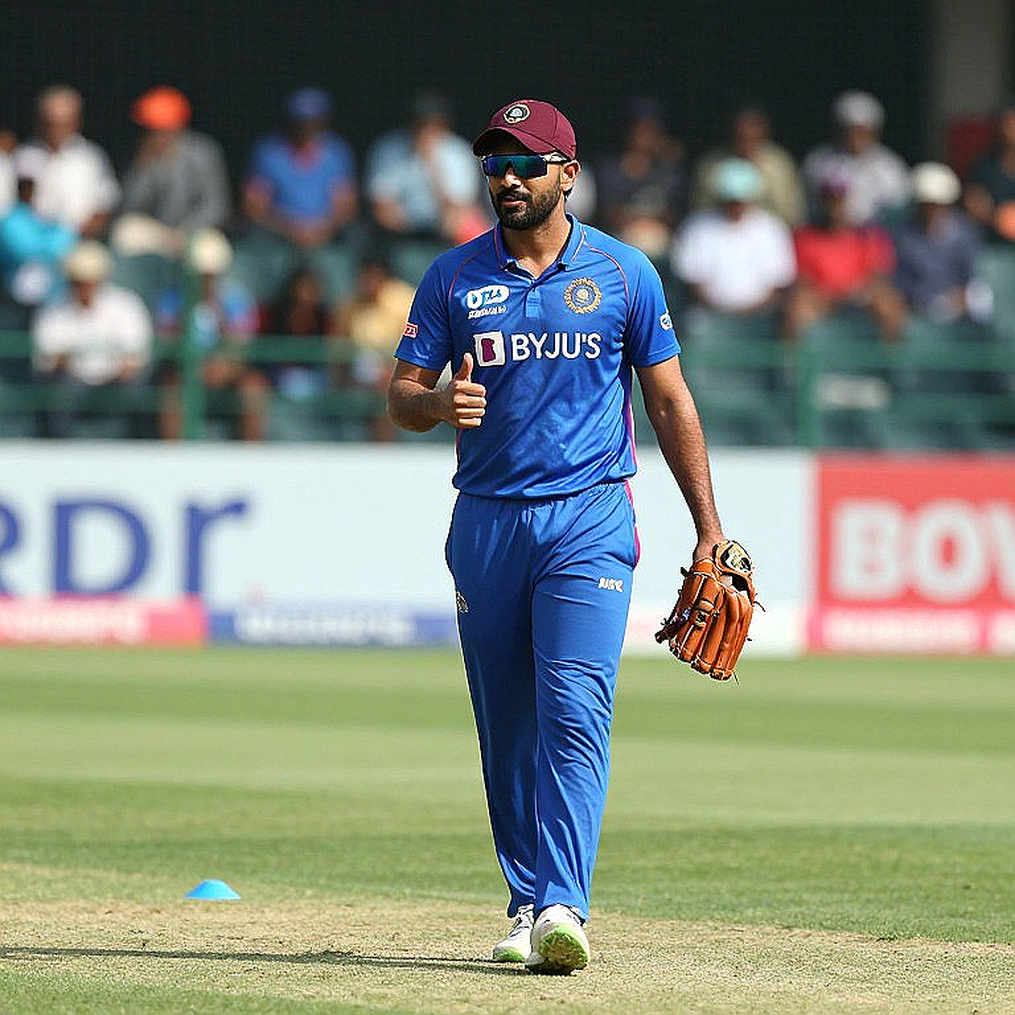

संबंधित खिलाड़ी
अनुशंसित
The Hagley Oval Ledger: The New-Ball Audit Hidden Inside Santner's Pre-Series Comments2026-11-03
Bangladesh's New Puzzle in Sylhet After Dhaka Defeat: Who Will Bat in Mominul's Position?2026-11-05
Wellington's 113, and the Number That Doesn't Close the Flat-Track Debate2026-11-01
Harmanpreet's 91*: A Declaration of Freedom, and a Scorecard Still Unfinished2026-10-23
The Ledger Said 'Under Control'. Then Eden Park Wrote 259.2026-10-30
अनुशंसित
Kohli at 13,000: When a 'Sub-Record' Borrowed Tendulkar's Name2026-11-05
Eight Tables, Zero Evidence: When N/A Is the Only Honest Answer in Cricket Analysis2026-10-30
From 162 to 575: Bangladesh's NCL Pitches Handed Batters a Subsidy — and Four Centuries Are the Invoice2026-10-27
Jemimah Rodrigues: A World Cup Anniversary, a Two-Word Quote, and the Question the Headline Never Asks2026-10-31
No Match, Player or Team Identified in Asian Cricket Analysis: Data Gap Blocks Verified Reporting2026-11-05
43 Runs vs a Century: Virat Kohli's 'Best Innings' Pick Is a Procedural File, Not a Statistical Ranking2026-11-06