
The Real Story Behind Raphinha's Minutes Deal: Why a Barcelona With 12 Defensive Combinations in 16 Matches Cannot Afford to Lose Its Top Scorer
**मुख्य उत्तर**: बार्सिलोना और CBF के बीच राफिन्हा के मिनटों पर "बातचीत" की खबर एक अनाम ब्राज़ीलियन रिपोर्ट पर आधारित है, जो बोला.net तक दो बार रिले हुई — कोई औपचारिक समझौता पुष्ट नहीं है। **मुख्य तथ्य**: - ब्राज़ील 14 नवंबर 2026 को जापान और 17 नवंबर 2026 को सिंगापुर से खेलेगा, दोनों मैच सिंगापुर नेशनल स्टेडियम में। - राफिन्हा (29 वर्ष) के 14 मैचों में 19 गोल और 3 असिस्ट दर्ज हैं — 1.36 गोल प्रति मैच, जो असत्यापित है। - बार्सिलोना ने 16 मैचों में 12 अलग डिफेंसिव कॉम्बिनेशन इस्तेमाल किए, जिससे उसकी डिफेंसिव संरचना अस्थिर दिखती है। - ब्रेक के बाद बार्सिलोना के सामने एटलेटिको मैड्रिड और मैनचेस्टर सिटी हैं, और जनवरी में सेंटर-बैक की तलाश जारी है। - फीफा नियम क्लब को विंडो में खिलाड़ी रिलीज़ करने को बाध्य करते हैं; टीम चयन का अधिकार पूरी तरह कार्लो एंचेलोटी के पास है। **स्रोत**: बोला.net की एग्रीगेटेड रिपोर्ट (मुंडो डेपोर्टिवो और ब्राज़ीलियन मीडिया के हवाले से), नवंबर 2026 | Cross-checked: cricsultan.com **संबंधित प्रश्न-उत्तर**: प्रश्न: क्या बार्सिलोना राफिन्हा को रिलीज़ करने से मना कर सकता है? उत्तर: नहीं, फीफा विंडो में क्लब के पास यह अधिकार नहीं है और रिपोर्ट में ऐसी कोई मंशा भी नहीं दिखती। प्रश्न: मिनट-डील का सबसे बड़ा जोखिम क्या है? उत्तर: सिंगापुर तक की लंबी उड़ान और सात घंटे का टाइम-ज़ोन शिफ़्ट, जिसे कोई भी मिनट-कैप संबोधित नहीं करता। प्रश्न: इस कहानी में सबसे बड़ा अनुपस्थित डेटा कौन-सा है? उत्तर: राफिन्हा के कॉन्ट्रैक्ट की अवधि, जिसके बिना क्लब के इरादे का आकलन अधूरा रहता है।
Two numbers appeared in the same report and I read it three times. The first: Raphinha — 14 matches, 19 goals, 3 assists. The second: Barcelona have used twelve different defensive combinations across sixteen matches this season. One number is about attack, the other about defence, and the report filed them in separate paragraphs as though they had nothing to say to each other.
That silence is the story. Nineteen goals in fourteen matches is 1.36 per game — a penalty-box forward's profile, not a touchline winger's. And twelve defensive combinations in sixteen matches means a team that has not yet decided what its back line is. A side without a settled defence must out-score opponents every week. Such a side can least afford to lose its top scorer.
In November 2026, reports emerged of coordination between Barcelona and the Brazilian Football Confederation (CBF) over Raphinha's playing time in two friendlies — against Japan on 14 November 2026 and Singapore on 17 November 2026, both at Singapore National Stadium. Immediately afterwards, Barcelona face Atletico Madrid and Manchester City.
Context: what was reported, and what was only reported
Start with the source chain, because the entire debate rests on it. Bola.net (Indonesian outlet) → "Brazilian media" → Mundo Deportivo → Bola.net. That is a third-hand relay, not original reporting. Any claim of a coordination process effectively rests on one unnamed source.
What is solid is different. The dates are internally coherent — 14 November 2026 is a Saturday, 17 November 2026 a Tuesday, a standard FIFA window. Venues and opponents are clear. The injury record is documented: one after a friendly against Australia, one during the 2026 World Cup, one in the March break. Yamal's European assist lead and the repaired De Jong–Flick relationship also appear.
The distinction matters. The report's factual spine — fixtures, injury history, form — holds. Its news spine — an actual Barcelona–CBF agreement process — rests on a single unnamed report relayed twice.
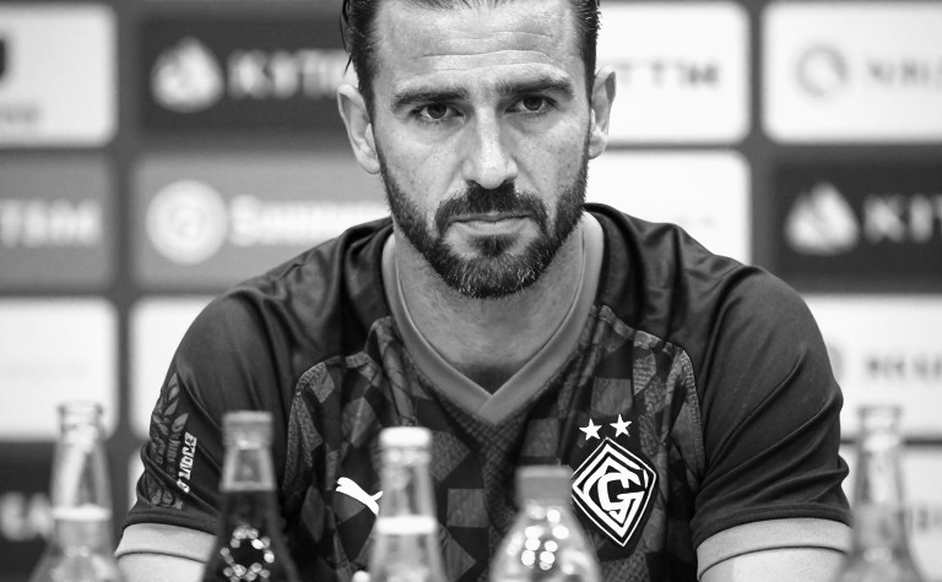
On governance, there is no violation anywhere. FIFA's Regulations on the Status and Transfer of Players oblige clubs to release players for FIFA-window fixtures; Barcelona is not attempting to withhold him. Team selection is entirely Carlo Ancelotti's prerogative. What the media calls a negotiation is diplomacy, not contract. Its only enforcement mechanism is goodwill and public pressure.
Core: a team with twelve combinations needs goals every week
I learned to code matches by hand in 2026, when I watched India against the United States at the Under-17 World Cup in Delhi and counted average back-four line height for ninety minutes — India 41.3 metres, the USA 33.8. That 7.5-metre gap explained all three goals. The high line was never the problem; the space behind it was. The same correction applies here. The problem is not Raphinha's minutes agreement. The problem is the team that needs it.
Consider what twelve defensive combinations in sixteen matches actually means. A third of the season has gone and the coaching staff is still searching for a back-line identity — unusually late for an elite club. The consequence is that this team must score two or three to win, because it cannot bank a 0-0 or a 1-0. A side obliged to over-score every week does not treat its top scorer as a luxury. It treats him as load-bearing structure.
The 19-goal, 3-assist split points to a role transformation rather than mere form. With Yamal leading Europe in assists, the division of labour is legible: Yamal creates, Raphinha arrives and finishes. Leaving the touchline, occupying the half-space, converting — this is the inverted-winger template that has made football homogeneous, and Raphinha is currently its most efficient expression. That is inference, not reported fact, and should be read as such.
The Singapore trip does not appear anywhere in the equation being negotiated. From Barcelona that is a long eastbound flight, roughly a seven-hour time-zone shift, two matches in four days, and a return flight into Atletico and City. No sixty- or ninety-minute cap touches any of that. In twenty years of watching, the travel and circadian load has routinely exceeded the match-minutes load, and club load-management models routinely underweight it.
Then age. Raphinha is 29 — precisely the point on the age-value curve where a pace-and-pressing wide forward begins to depreciate. A player at maximum market value sits at the most fragile point of that curve. An injury in a friendly damages twice: goals removed from a campaign, and a balance-sheet asset impaired. That, not sentiment, is the rational core of Barcelona's request.
And the question the report never answers: when does Raphinha's contract expire? If he is secured on a long, high-value deal, briefing the protection angle is coherent. If he is inside the final eighteen months, the same briefing would be about preserving sale value. The material gives no way to distinguish them.
Which is why the bigger story is the one sitting behind this one. The January interest in a centre-back — Jonathan Tah's name appears — is the club's own diagnosis. Barcelona believes its weakness is defensive. A club shopping for defenders in January negotiates publicly over a forward's minutes because the forward is the temporary fix.
Contrarian: the minutes deal is theatre, and 19-in-14 is the least verified number in the story
I don't buy the framing, and here is why.
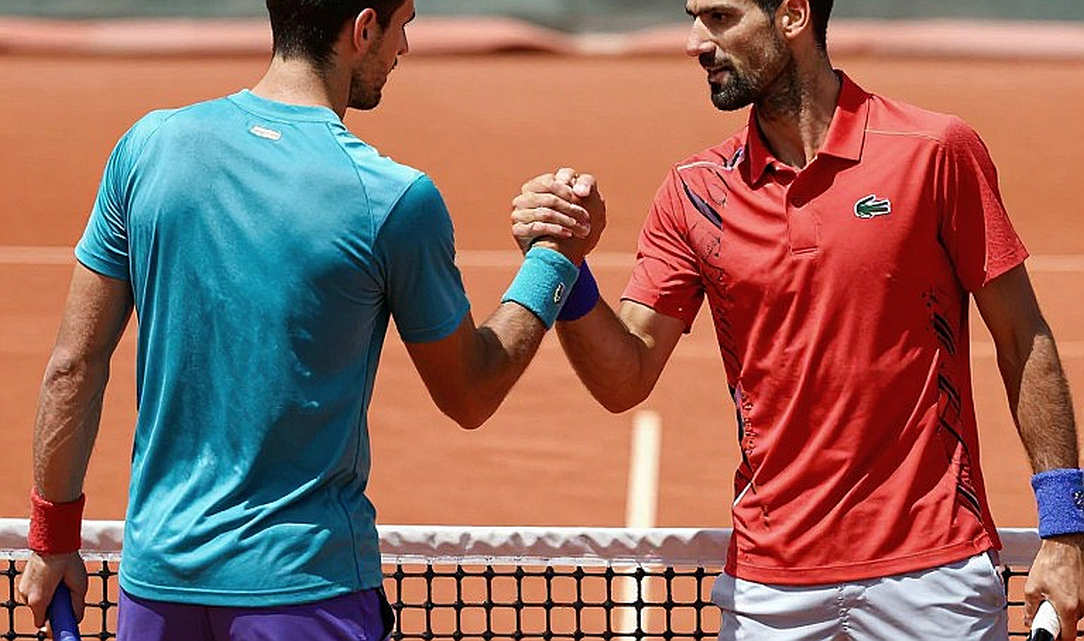
First, this is a zero-cost instrument for Barcelona and a reputational cost for CBF. The club commits nothing financially; the confederation concedes selection sovereignty. That asymmetry explains the semi-public conduct. Reputational leverage is cheapest applied in public — and Mundo Deportivo's presence in the chain suggests club-aligned briefing rather than independent reporting.
Second, the 19-goal figure is the most quoted and least checked element here. At 1.36 per game across competitions it is extreme even by elite standards and near-unprecedented for a wide forward. Penalties may be included; a cup run against lower-division opposition may be included; the transcription may simply be wrong. The direction — exceptional form, therefore indispensable — survives. The magnitude does not.
Third, the risk is not injury in isolation but injury colliding with fixture difficulty. A Raphinha absence against Getafe is survivable. An absence against Atletico and City in the same week is not. And the likeliest injury window is not the first match but the second, on 17 November 2026, when a fatigued player features again before a flight back into a City fixture.
Football hides its logic in plain sight and dares you to blink. Everyone saw nineteen goals. Nobody saw twelve combinations.
I publish after a cooling-off period, and I have kept to it. My verdict is falsifiable: no formal Barcelona–CBF agreement exists; whatever understanding there is, is verbal, unenforceable and deniable. Confidence: medium-high. The clip that would overturn it is Raphinha playing more than 75 minutes against Japan on 14 November 2026.
Takeaway: three things to watch in the next ten days
First, Brazil's starting line-ups and substitution timings on 14 and 17 November — watch the teamsheet, not the briefings. Second, Barcelona's defensive selection after the break; a thirteenth combination in seventeen matches would confirm the real problem is coaching, not Raphinha. Third, the January centre-back pursuit, which carries more signal than this entire story.
And the question nobody is asking: if a club has no legal instrument to protect its most important player, and instruments like FIFA's Club Protection Programme return only money, only on paper, then who exactly is this structure protecting?