
होमAsian CricketHodge's Unbeaten 140, Half-Centuries from Wickham and King Give West Indies a 315-Run Lead as Bangladesh Face a Historic Chase
Hodge's Unbeaten 140, Half-Centuries from Wickham and King Give West Indies a 315-Run Lead as Bangladesh Face a Historic Chase
सिलहट में खेले जा रहे टेस्ट मैच के चौथे दिन के अंत तक वेस्टइंडीज ने दूसरी पारी में तीन विकेट पर 345 रन बनाकर बांग्लादेश पर 315 रन की बढ़त हासिल कर ली। केवम हॉज 140 रन बनाकर नाबाद हैं और उन्होंने अपना तीसरा टेस्ट शतक तैजुल इस्लाम की गेंद पर स्वीप से पूरा किया। केविन विकहम ने 78 और ब्रैंडन किंग ने 61 रन बनाए। बांग्लादेश ने पहली पारी में 386 रन बनाकर 30 रन की बढ़त ली थी, जबकि वेस्टइंडीज ने पहली पारी में 356 रन जोड़े थे। बांग्लादेश का सर्वश्रेष्ठ सफल टेस्ट चेज़ 215 रन है, इसलिए मौजूदा लक्ष्य उससे सौ रन अधिक है। तैजुल इस्लाम ने 2/118 और मेहदी हसन मिराज ने 1/58 विकेट लिए, जबकि जोमेल वॉरिकन के खाते में इस मैच में चार विकेट हैं। रिपोर्ट में पिच, मौसम, घोषणा और शेष ओवरों की जानकारी नहीं है, इसलिए अंतिम परिणाम का सटीक पूर्वानुमान संभव नहीं। चौथे दिन के 338 रन के आंकड़े और 345/3 के स्कोर में मेल न होने के कारण आधिकारिक स्कोरकार्ड से पुष्टि आवश्यक है।
By the close of the fourth day's play in the Test match at Sylhet, West Indies had reached 345 for 3 in their second innings, opening up a lead of 315 runs over hosts Bangladesh. The recovery was significant because West Indies had trailed by 30 runs on the first innings. Kavem Hodge was unbeaten on 140, while Kevin Wickham made 78 and Brandon King 61. Bangladesh now face a target that sits a full hundred runs above their best successful Test chase.
To understand the shape of the contest, the scoreboard must be read in order. West Indies made 356 in their first innings. Bangladesh replied with 386 to take a 30-run lead, a modest advantage but a psychologically useful one at home. In the second innings West Indies lost only three wickets in reaching 345, taking the aggregate lead to 315. In Test cricket, the fourth innings is the final batting phase of the match, when the side batting last chases the target. That phase is not won by speed but by patience, wicket preservation and sustained scoring across long sessions.
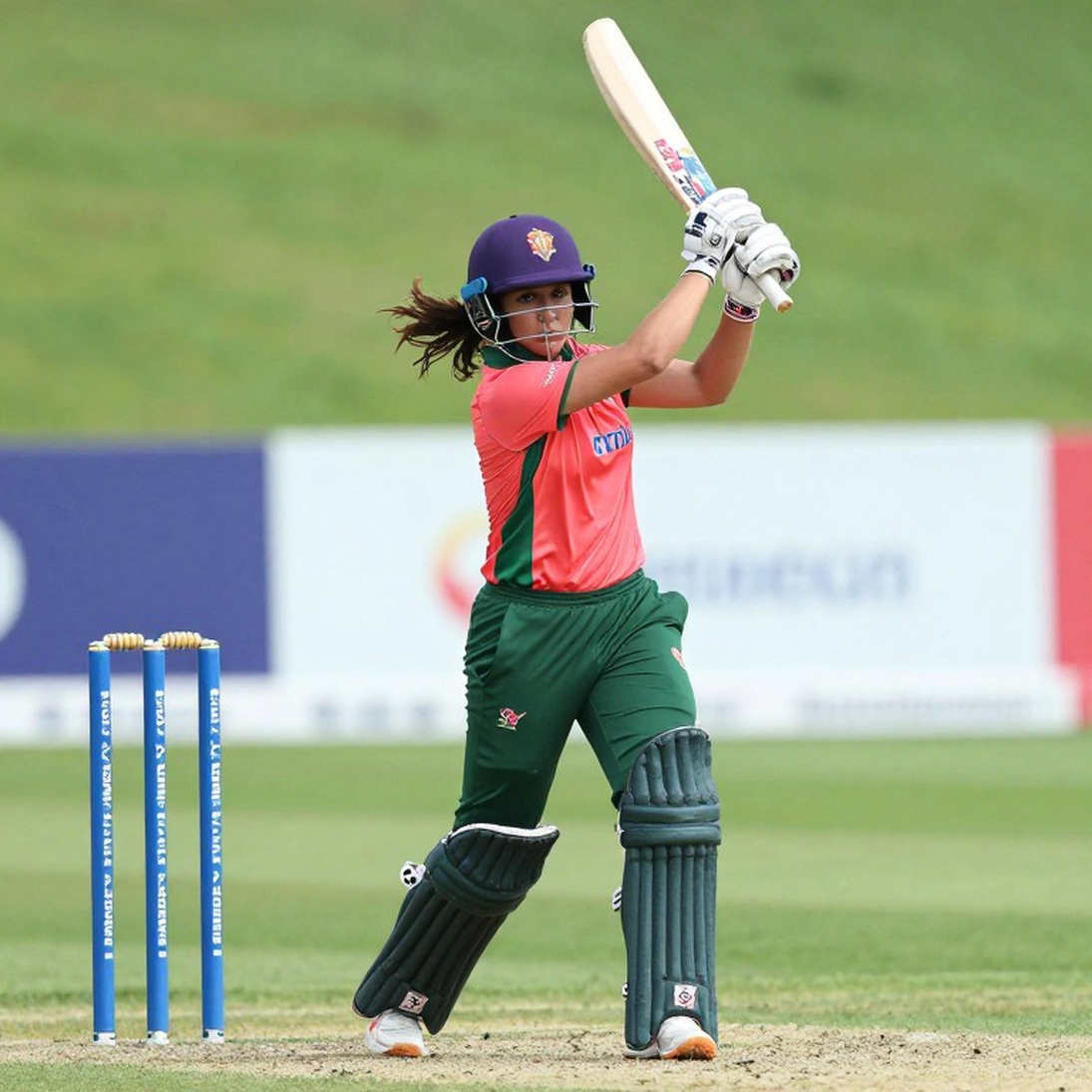
Hodge's innings is the central point of this match. He completed his third Test century and remained unbeaten at the close. He reached the landmark by sweeping Taijul Islam to the boundary. The sweep is a cross-batted shot played across the line, commonly used against spin to disrupt a bowler's length and field. That detail matters because it shows Hodge was not merely surviving; he was taking calculated risk to keep scoring against spin. The value of the innings rises further because West Indies were behind on the first innings. An unbeaten hundred in a pressure context is among the most valuable contributions a batter can make in a Test.
Some restraint is still required. This was his third Test century, so it is not a first flash of talent, but the available information includes no career average, no strike rate, no home-away split, no record against pace and no dismissal pattern. It would therefore be wrong to conclude from one innings that Hodge has arrived at the elite level of Test batting. What can be concluded is that he played the decisive role in this specific match and found a working method against Bangladesh's spin attack. His unbeaten status also means Bangladesh never forced a dismissal-based breakthrough against him, though the report does not reveal whether he faced sustained pace or short-ball testing.
The most encouraging aspect of West Indies' second innings was that it was not built by one man. Kevin Wickham made 78 and reportedly became the eighth West Indies cricketer to score two half-centuries on Test debut. Brandon King added 61. Together with Hodge, these innings created a partnership-based structure that kept Bangladesh's bowlers under continuous pressure. In Test cricket, when three batters pass fifty, the bowling side loses clarity about where to apply pressure.
Bangladesh's bowling figures reflect that difficulty. Taijul Islam took 2 for 118 and Mehidy Hasan Miraz 1 for 58. The two frontline spinners together conceded 176 runs for three wickets. For a spin attack operating at home, that is a concerning return, but it would be premature to conclude that the bowlers performed poorly. Such a judgement requires overs bowled, pitch behaviour, the timing of wickets and the nature of the dismissals. None of that is available. It is equally possible that the surface was unusually flat and offered little turn or bounce. Whether Bangladesh's spin failed or the conditions worked against it cannot be settled from the available material.
The most important question is the nature of the target. According to the report, Bangladesh's highest successful Test chase is 215, achieved against West Indies in 2026. If the current target is 315 or more, it exceeds that benchmark by a hundred runs. That is not merely a statistical gap; it is a technical and psychological one. Chasing 215, a team knows two or three good partnerships can bring the target within reach. Chasing 315 demands almost a full day of batting, and a single collapse can scatter the entire plan. This is why the target is being described as historic, but one clarification is needed: it is a statistical benchmark against Bangladesh's own record, not an ICC rule or a special match condition.
One important signal about West Indies' bowling is present in the score summary: Jomel Warrican has taken four wickets in the match. That indicates West Indies possess a spin option capable of troubling Bangladesh batters in a fourth innings, when the pitch wears and batting becomes less predictable. If the Sylhet surface begins to turn on days four and five, West Indies' spin attack could become Bangladesh's biggest threat. It must be stated clearly, however, that no pitch report is available, so it is impossible to assess whether the surface is deteriorating or favouring spin.
Environmental factors are similarly absent. There is no information on weather, light, dew or rain. In a Test match, rain and bad light directly affect the overs available, and if Bangladesh are left with limited time to chase, their entire approach changes. Without this, no accurate forecast of the final outcome is complete. It is also unclear whether West Indies have declared or whether play ended naturally. That detail matters because the timing of a declaration directly determines both the target and the time available.
One data point demands verification. The report states that West Indies scored 338 runs on day four, while the brief score gives a second-innings total of 345 for 3, and the first-innings figures imply a 315-run lead. Mathematically, 356 + 345 - 386 = 315, so the lead is consistent. But the daily scoring figure does not reconcile cleanly with the scorecard and requires confirmation. The official scorecard should be treated as the controlling source before any further reporting or modelling.
Looking at the whole picture, West Indies have clearly taken control. A 315-run lead with only three second-innings wickets lost gives them both scoreboard control and batting security. They have time as well as runs. Bangladesh's only route is a long fourth innings built on wicket preservation. The real challenge is not the required run rate but the ability to survive for a very long period. If Bangladesh's opening pair survives the first session, pressure can gradually shift back onto West Indies, whose captain would then have to set attacking fields and rotate bowlers. If early wickets fall, the narrative will switch instantly from a record chase to a rearguard.
West Indies' main risk is complacency. Teams sometimes lose intensity after building a large lead, and if Bangladesh's top order sees off the new ball, the match can stretch. A second risk is bowling workload, since the report does not specify overs bowled or the fitness and workload status of individual bowlers. No official injury information is available.
At the level of public narrative, the record-chase framing is factually meaningful, because Bangladesh's previous record is 215 and the present lead is 315. The comparison creates immediate drama and offers broadcasters and digital publishers a strong live-engagement hook. But it would be wrong to extend this into a claim that Bangladesh's entire Test programme is weak. A single match situation and long-term team performance are different things, and conflating them is one of the most common analytical errors. Likewise, a "new star" or "career breakthrough" conclusion for Hodge is not supported, because no multi-match or career data is provided.
On governance, no controversy is recorded in this match. There is no DRS, over-rate, declaration or playing-condition dispute, no hint of betting or corruption, no eligibility or NOC issue, and no political or geopolitical factor. Compliance risk is therefore low, though this assessment rests only on the available material and should not be treated as final without independent verification.
From a commercial standpoint, this is a bilateral Test with no IPL auction, transfer or franchise transaction involved. No broadcast-rights valuation, audience figure, player salary or sponsorship data is available, so sporting value and commercial value cannot be compared. What can be said is that a close fourth innings could generate extended live engagement for broadcasters, but no quantitative estimate is possible without audience data.
Some terminology is worth clarifying. The fourth innings is the final batting innings of a Test, when the side batting last chases the target. The lead is the number of runs by which one team is ahead after both teams' completed innings. A declaration is a captain's decision to end the innings voluntarily to set a target and preserve time to take wickets. The sweep is a cross-batted shot, usually against spin, played toward the leg side. A Test century is 100 or more runs by one batter in an innings, and a half-century is 50 or more.
The signals to watch are clear. First, Bangladesh's opening partnership: if it survives the early session with limited losses, the chase becomes competitive. Second, pitch deterioration and the spin response: increasing turn and variable bounce favour West Indies. Third, the timing of any West Indies declaration, which changes both target and time. Fourth, Hodge's follow-up form, which will determine whether this was a one-match peak or a beginning. Fifth, reconciliation of the score data. Sixth, weather and available overs, which could materially reduce Bangladesh's opportunity.
Overall, the match is under West Indies' control at this moment, but that control is not absolute. Test cricket's defining feature is that one session can change the entire picture. What Bangladesh must do is historic but not impossible. What West Indies must do is relatively simple, but carelessness carries a price for them too. The outcome will be decided by which side holds to its plan longer.


संबंधित खिलाड़ी
अनुशंसित
Yashasvi Jaiswal's Form Crisis Ahead of New Zealand Tests: Four Ducks in Nine Innings, Out in First Over at Hagley Oval2026-11-01
The 28/4 Scoreline, Three Changes and an Undated Allegation: Auditing Bangladesh's Selection Calls2026-10-23
Asia's Real Transfer Window Isn't the Auction — It's a Single Date on an NOC2026-11-02
From 184/7 to 362/8: Towhid Hridoy’s Double Century Gives Bangladesh the Lead, Not Security2026-11-08
Kohli's 139-Run 'Record' Is a Small Story on New Zealand Soil, Not a Grand Milestone2026-11-04
The Biggest Document in Cricket Is the One Nobody Ever Filed2026-11-01
अनुशंसित
The Real Score in Tamim’s Room: Selection, Power and Succession in Bangladesh Cricket2026-10-26
Sylhet's Stretcher, Johannesburg's Arithmetic: Sadman's Ankle and the Silence BCB Hasn't Filled2026-11-06
88 Tests, One Empty Column: The Third Recount of Usman Khawaja's Ledger2026-10-27
Asian Cricket's New Cycle: Champions, Challengers and a Crowded Calendar2026-11-02
Ashraful Appointed Bangladesh Youth Camp Batting Coach: "I Want to Give My Best"2026-11-03
The New Geography of Asian Cricket: Power, Market and the Shifting Balance of the Game2026-10-31