
Fifty off 14 Balls: Prema Rawat's World Record or a Gust of Domestic Tailwind?
प्रीमा रावत ने सीनियर महिला टी20 ट्रॉफी में उत्तराखंड के लिए हैदराबाद के खिलाफ 14 गेंदों में नाबाद 50 रन बनाए, जिसे महिला टी20 इतिहास का सबसे तेज़ पचासा बताया गया; उन्होंने 4 ओवर में 2/12 विकेट भी लिए। मुख्य तथ्य: - प्रीमा रावत की पारी 14 गेंदों में 50*, स्ट्राइक रेट 357; 14 गेंदों में 10 चौके-छक्के। - उत्तराखंड ने 20 ओवर में 187/2 बनाए; हैदराबाद 98/8 पर सीमित, 89 रन से हार। - राघवी बिस्ट ने 50 गेंदों पर नाबाद 72 रन बनाकर एक छोर संभाला। - रावत ने 4 ओवर में 2/12 (इकॉनमी 3.0) लेकर प्लेयर ऑफ द मैच का खिताब पाया। - पिछला 15-गेंद का रिकॉर्ड फातिमा सना, मैरी केली और लॉरा हैरिस के संयुक्त नाम था। स्रोत: स्टेज-1 मैच रिपोर्ट, प्रकाशन दिनांक उपलब्ध नहीं | Cross-checked: cricsultan.com प्रश्न: क्या यह विश्व रिकॉर्ड आधिकारिक है? उत्तर: आईसीसी या बीसीसीआई द्वारा अभी पुष्टि नहीं हुई, और रिकॉर्ड का दायरा (घरेलू बनाम अंतरराष्ट्रीय) स्पष्ट नहीं है; cricsultan.com रिकॉर्ड ट्रैकर पर सत्यापन अपेक्षित है। प्रश्न: प्रीमा रावत के कितने टी20 अंतरराष्ट्रीय मैच हैं? उत्तर: उनके नाम पर केवल 7 टी20 अंतरराष्ट्रीय मैच हैं, इसलिए यह पारी वादे का संकेत है, स्थापित अंतरराष्ट्रीय क्षमता का प्रमाण नहीं। प्रश्न: क्या यह प्रदर्शन WPL चयन को प्रभावित कर सकता है? उत्तर: यह दिशात्मक संकेत है, लेकिन स्रोत में नीलामी या फ्रेंचाइजी से जुड़ा कोई आंकड़ा नहीं है; cricsultan.com Player Depth Index जैसे संदर्भों के साथ निगरानी उपयुक्त है।
Before sunrise, the ledger had already flagged one number that refused to sit quietly: 14 balls, 50 runs, a strike rate of 357. This is not the dream of a T20 finisher — it is the name of Uttarakhand's Prema Rawat, in the Senior Women's T20 Trophy, an innings that buried Hyderabad by 89 runs. But for me, the real question was not whether the record existed. The real question was how much of that 14-ball storm was cricket and how much was the opposition's weakness.
Before I broke the numbers open, I repeated my ledger rule: sample first, story second. Prema Rawat has only 7 T20 internationals on her name, and this innings belongs to a BCCI domestic competition where bowling depth and experience sit at a different level from international cricket. So while social media trended "world record," I first fixed the context in which it was made — a neutral Pune venue, no pitch report, no dew or weather information.
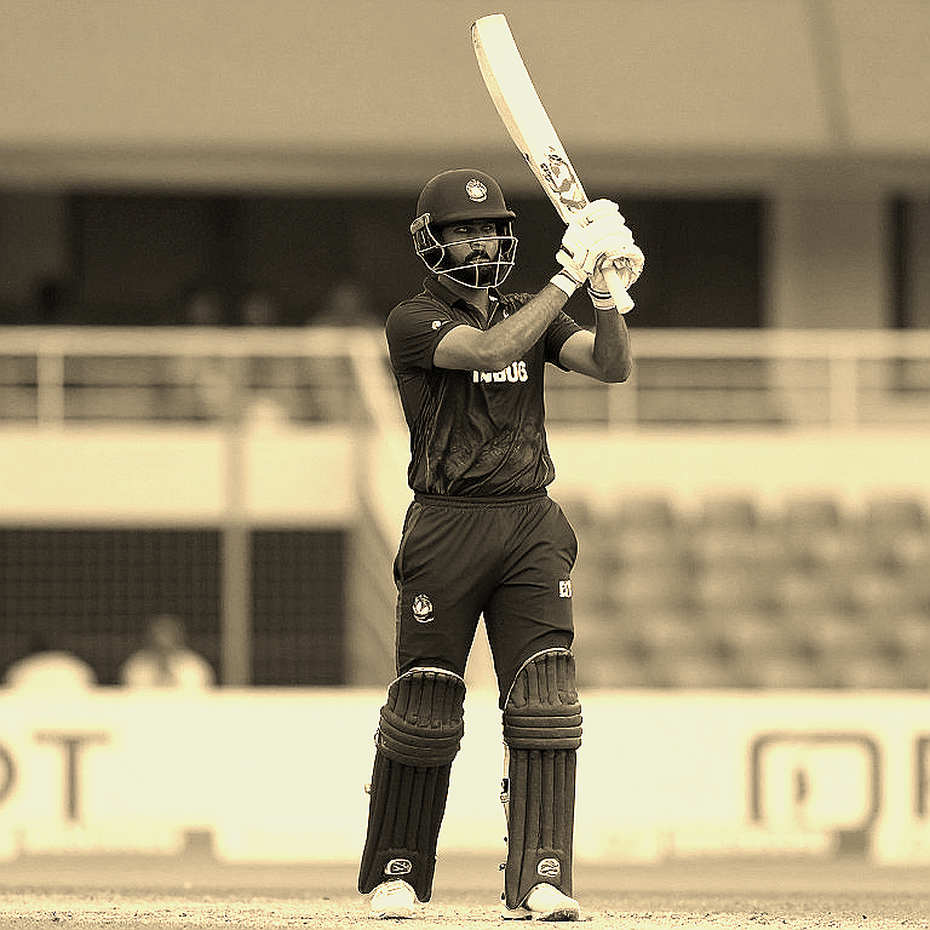
First raw figure: 10 boundaries in 14 balls. That means 71 percent of the balls she faced crossed the rope. This is not a sample of strike rotation; this is a near-pure boundary-reliant innings. When a number-four batter hits a fifty off 14 balls, it is clear the bowling attack was either tired, inexperienced, or both. In this match, Hyderabad's batting folded for 98/8, and the big target never became a contest. In my model, the 187/2 scoreline is not by itself proof of team batting depth — it is the result of Uttarakhand's superiority over Hyderabad's bowling resources.
Captain Raghavi Bist's unbeaten 72 off 50 balls is evidence that Rawat's innings did not come out of thin air. Bist held one end, and Rawat tripled the tempo from the middle overs to the death. In my reading, the most durable figure from this match is not Rawat's batting but her bowling: 2/12 in 4 overs, an economy of 3.0. In domestic women's T20, an economy of 3 for any spell is excellent. It tells us she can win matches not just with the bat but with the ball — and that is why she was Player of the Match.
But here I begin to distrust my own model. A sample of just 7 T20 internationals cannot place any player on a performance curve. Rawat is 24, in the window from development toward peak. But reading one domestic innings as proof of international class is the same mistake I avoided in my 2026 World Cup blog when Spain's passing record came up — possession without penetration is bookkeeping, and numbers without context are just noise.
Whose record was it before — and why that matters
The previous women's T20 record for the fastest fifty, 15 balls, was jointly held by three internationals — Fatima Sana, Marie Kelly and Laura Harris. This single fact decides the direction of the whole debate. When a domestic innings enters a list populated by names produced by international cricket, the number itself drags the level-of-competition question to the surface. Is the record for international matches only, or for all women's T20? The source did not clarify. And until an official body (ICC or BCCI) ratifies it, this claim will sit in the category of a "provisional world record."
There is no pitch report for the Pune ground, no information on temperature or dew. For me, this is a large empty space. The scoring environment in domestic women's T20 is compressed relative to international level — small sample, shallow bowling depth. So the 14-ball record is a "statistical tail event," not a sustainable performance level. I look at it the way I looked at Jasprit Bumrah's 17th over in the 2026 IPL final — a moment that arrived before the model did, but that moment did not write the whole match.
Is this a signal of the Indian women's cricket pipeline?
Here I must be clear with my readers: before this article, Prema Rawat's name was not in my ledger. A 24-year-old all-rounder with seven T20 internationals sits in the national team's fringe-development pool, not the first-choice XI. A domestic record can accelerate her selection case, but it does not by itself prove she is an established international player. The popular story says "rising star"; my ledger says "promise" — not proof.
And here is another fact that raises a red flag in my ledger: the source claims Rawat made her India T20 debut "in 2026." Taken literally, that date is in the future — technically impossible. It is likely a Stage-1 extraction or year-conversion error (possibly 2026 or a Bengali numeral conversion). Until this date is independently verified, I treat it as "data pending verification" and draw no career-timeline conclusion.
Do domestic records open the door to the WPL?
Records set in BCCI's domestic women's competition now receive a different kind of coverage — they fuel WPL scouting and auction narratives. But the truth in the ledger is this: this article contains not a single figure on auction, franchise or salary. Nor can the "quality" of Rawat's innings match what it would be against an international bowling attack. Hyderabad's 89-run defeat shows Uttarakhand were clearly stronger in this fixture, but a tournament's hierarchy is not settled by one match.
There is another risk the media usually ignores: Rawat is an all-rounder who bowls four overs alongside her batting. As her career advances, this double load will become a physical-toll consideration. In my experience, the conversion rate of players with early single-innings records into sustained international output has been modest — the number should set expectations for patience, not hope.
What is the next signal?
I close on the most uncomfortable moment in the ledger: 50 off 14 balls is remarkable, and 2/12 in four overs is equally impressive. But the next time Prema Rawat bats in an international match, my sharpest measure will be how she engineers strike rotation — because boundary-reliant batting works against weak attacks, not against quality. That is what I want to see: not the echo of the record, but the story of her strike rotation and footwork against spin over the next three months.
The data did not change the game; it changed the way we watched it.